


Biochar: An Innovative Solution for Indian Agriculture
Biochar, a stable form of carbon-rich material, is gaining attention as a sustainable agricultural solution in India. Produced from biomass through pyrolysis, biochar improves soil health, boosts crop yields, and helps mitigate climate change by sequestering carbon in the soil. This blog will explore the various aspects of biochar, its benefits, and its relevance in Indian agriculture.
Benefits of Biochar in Agriculture
Biochar offers multiple advantages for Indian farmers, particularly in regions where soil fertility is declining due to excessive use of chemical fertilizers.
- Enhances Soil Fertility: Biochar improves soil structure, water retention, and nutrient availability, making it easier for crops to grow.
- Increases Crop Yields: Studies have shown that biochar application can increase crop productivity by 15-20% under certain conditions.
- Carbon Sequestration: Biochar helps in sequestering carbon for long periods, reducing greenhouse gas emissions.
- Reduces Need for Fertilizers: Biochar holds nutrients in the soil, reducing the amount of chemical fertilizer needed by 30% or more.
- Improves Soil Health: Biochar helps in microbial activity, enhancing soil biodiversity and promoting healthier plant growth.
Biochar Production Process
Biochar is produced through pyrolysis — the thermal decomposition of organic materials in the absence of oxygen. This process transforms agricultural waste like rice husks, sugarcane bagasse, coconut shells, and wood chips into a stable, carbon-rich material.
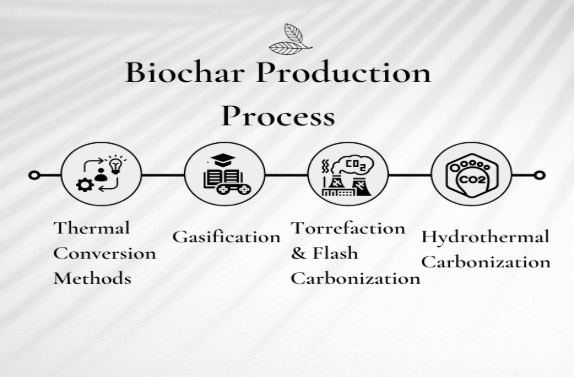
Biochar is typically made using thermochemical processes such as:
- Roasting
- Gasification
- Hydrothermal Carbonization
- Pyrolysis
Each method varies depending on the type of biomass used and operational conditions like temperature, heating rate, and residence time — all of which affect the yield and quality of biochar.
2. Gasification
Gasification involves heating biomass at high temperatures to produce gases like carbon monoxide (CO), hydrogen (H₂), and methane (CH₄).
Higher temperatures favor more CO and H₂ production while reducing CH₄ and CO₂ levels.
3. Torrefaction & Flash Carbonization
Torrefaction is a mild pyrolysis process done at 200–300°C in an oxygen-free environment. It removes moisture, oxygen, and CO₂, improving the energy density, particle size, and storability of the resulting biochar. The process includes heating, drying, and cooling stages.
4. Hydrothermal Carbonization
This method operates at 180–250°C using water and biomass in a sealed reactor. Through dehydration, hydrolysis, and polymerization, complex compounds like lignin break down and reform into biochar via repolymerization and crosslinking reactions. It’s especially suitable for wet biomass.
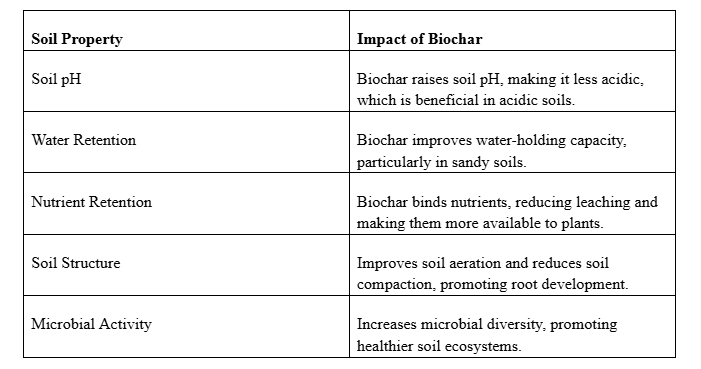
Impact of Biochar on Soil Properties
One of the key benefits of biochar is its ability to alter soil properties positively. These changes enhance the soil’s capacity to support plant growth.
Best practices for applying biochar in Indian agriculture include:
- Incorporation into the Soil: Biochar should be mixed thoroughly with soil to ensure even distribution.
- Compost Addition: Combining biochar with compost enhances its effectiveness by improving nutrient availability and microbial activity.
- Site-Specific Application: Farmers should consider soil type and crop requirements before deciding the biochar application rate.
Benefits of Biochar in Agriculture
Improves Soil Health:
Biochar enhances nutrient retention, boosts microbial activity, and increases the water-holding capacity of soil — especially in dry or degraded areas.
Reduces Soil Bulk Density:
Studies show biochar can reduce soil density by 3–11%, while increasing porosity by up to 64%, improving the movement of air, water, and heat through the soil.
Enhances Nutrient Availability:
When combined with other organic amendments, biochar increases the cation exchange capacity (CEC) and nitrogen levels, boosting overall crop productivity.
Combats Soil Acidity:
Biochar raises soil pH, helping neutralize acidic soils and releasing key cations like potassium, magnesium, calcium, and sodium into the root zone.
Long-Lasting Soil Support:
It slowly releases nutrients, stabilizes organic matter, and improves cation retention, ensuring lasting fertility with fewer inputs.
Improves Soil During Heavy Rainfall:
With its porous structure and stability, biochar prevents nutrient leaching and maintains soil structure, even during intense monsoon conditions.
Biochar’s Dual Impact on Soil Microbes
Biochar influences soil microbial communities in both positive and negative ways.
On the positive side:
It enhances plant–root interactions
Promotes the growth of nitrogen-fixing bacteria, molds, and yeasts
Aids in carbon stabilization and degradation of microbial pollutants
Acts as a habitat and energy source for beneficial microbes, increasing their population
On the flip side:
Some biochar by-products, like polyphenols, can be toxic to certain soil microbes
May suppress mycorrhizal fungi and reduce overall microbial biomass
Effects vary based on biochar type, feedstock, and soil conditions
This dual nature makes it essential to apply biochar in a site-specific, tested manner.
Conclusion: A Sustainable Shift for Indian Agriculture
Biochar holds significant promise for the future of Indian agriculture. With its ability to:
- Improve soil health
- Enhance crop productivity
- Reduce fertilizer dependence
- Sequester carbon and lower emissions
…it emerges as a powerful tool for climate-smart and sustainable farming.
Adopting biochar isn't just a soil amendment — it's a step toward a more resilient, eco-friendly, and productive agricultural system.