

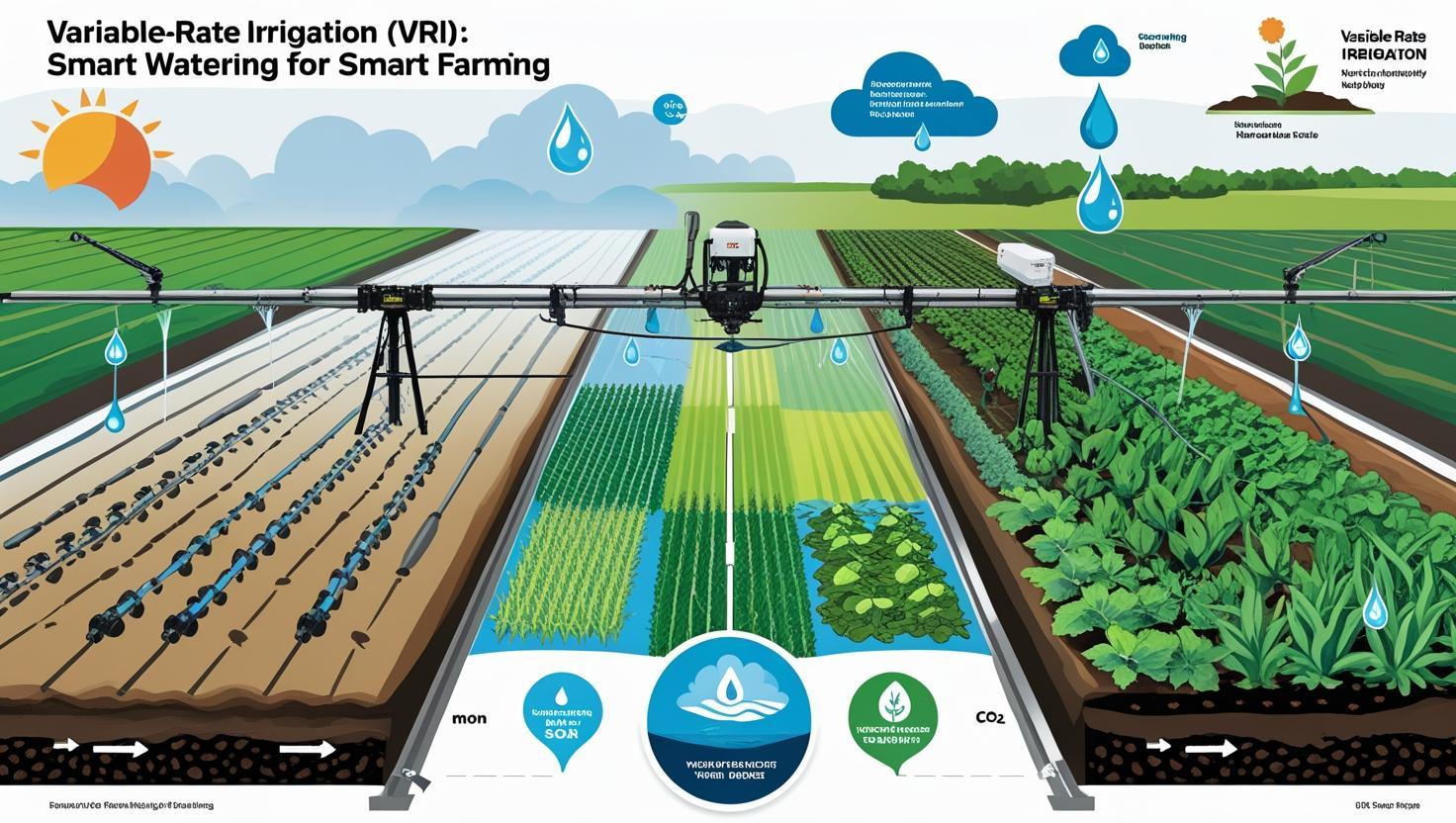
Variable-Rate Irrigation (VRI) technology is transforming agriculture by enabling precise water distribution tailored to specific field conditions. This modern approach to irrigation is crucial for sustainable agriculture, helping to conserve water, reduce CO2 emissions, and improve crop yields.
What is Variable-Rate Irrigation (VRI)?
VRI is an advanced irrigation method that adapts water application rates within a field to accommodate varying soil types, topography, and crop needs. Instead of uniform irrigation, VRI customizes water distribution, addressing different zones with unique watering requirements.
Why VRI Matters for Agriculture
- Conserving Water: Agriculture uses approximately 70% of available freshwater annually, much of it on only 25% of the world’s arable land.
- Enhancing Crop Output: By customizing water application, VRI reduces over- and under-watering, optimizing conditions for crops.
- Supporting Sustainability: VRI aligns with UN Sustainable Development Goals by improving resource efficiency and minimizing environmental impact.
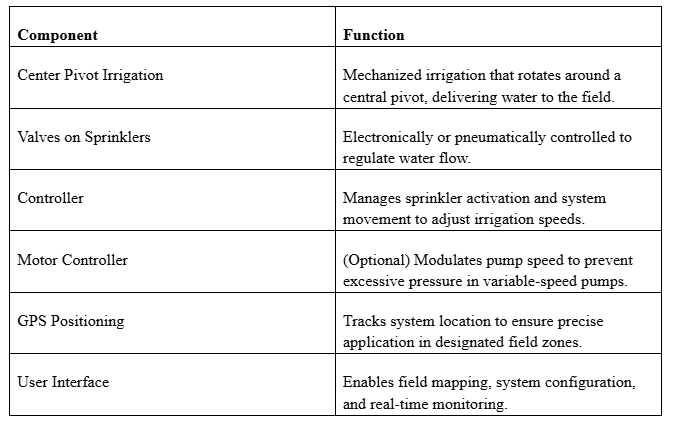
Components of a VRI System
Types of VRI Systems
1. Sector or Speed Variable Irrigation:
- Ideal for fields with uniform soil patterns.
- Adjusts water application using pivot speed, segmenting the field into pie-slice-shaped sections.
2. Variable Zone Irrigation:
- Divides fields into smaller, irregular management zones for precise control.
- Suitable for complex field conditions, often paired with micro-irrigation and drip irrigation systems.
Advantages of VRI
- Efficient Water Usage: Prevents overwatering and reduces water wastage.
- Energy Conservation: Lowers energy demands by optimizing water application.
- Enhanced Yield and Quality: Maintains optimal conditions tailored to crop needs.
- Flexible Crop Management: Supports varied crop types and stages within the same irrigation setup.
- Reduced Environmental Impact: Decreases CO₂ emissions by approximately 20%.
Disadvantages of VRI
- Higher Equipment Costs: VRI systems require specialized equipment, increasing initial investment.
- Monitoring Challenges: Tracking water usage in different field zones can be complex.
- Pressure and Flow Variability: VRI systems need adaptable pressure and flow rates, especially for center pivots.
Performance and Environmental Impact
Studies demonstrate that VRI can reduce irrigation water use by 8-20% compared to traditional methods, ensuring crops are well-watered while conserving resources. This leads to a 20% reduction in CO₂ emissions, making VRI a crucial technology for sustainable agriculture.
Conclusion
Variable-Rate Irrigation systems offer a forward-thinking solution for farmers striving for efficiency and sustainability. By investing in VRI, the agricultural sector can meet growing food demands while preserving essential natural resources.