


Seed certification is a systematic process that ensures seeds used for agricultural purposes meet high standards for quality and reliability. Certified seeds are selected for their adaptability, germination rate, disease resistance, and yield potential, making them an essential resource for farmers and agricultural professionals.
What Is a Seed?
A seed is any plant part used for commercial cultivation. Key qualities of certified seeds include:
- Better Germination: Ensures higher seedling success.
- Vigorous Growth: Leads to robust plants and high yields.
- Early Maturity: Shortens the crop cycle.
- Adaptability: Suitable for various environments.
- Disease and Insect-Free: Reduces the need for pesticides.
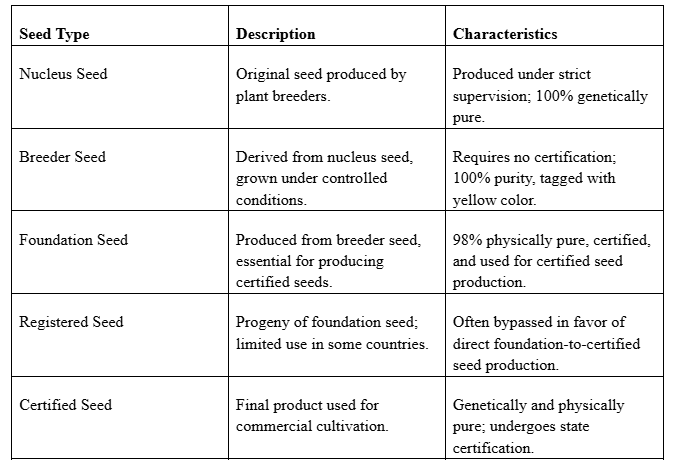
Types of Seeds in Certification
Seed Production Stages
1. Agricultural Practices:
- Select seed type and variety.
- Determine optimal sowing time, spacing, and fertilizer requirements.
- Manage irrigation, hoeing, and weeding for plant health.
2. Disease and Insect Control:
Protect seeds with recommended doses of fungicides and pesticides to ensure healthy growth.
3. Isolation Distance:
Maintain a distance of around 3 meters for self-pollinating crops to avoid cross-contamination.
4. Rouging:
Remove off-type plants before and after flowering to maintain genetic purity.
5. Harvesting:
Conduct clean harvesting under supervision for quality assurance.
Seed Processing and Packing
- Cleaning: Removes unwanted debris and damaged seeds.
- Grading: Sorts seeds by weight, length, or size for uniformity.
- Treating: Seeds are treated with fungicides to protect from disease.
- Packing: Seeds are packed to avoid moisture absorption and contamination.
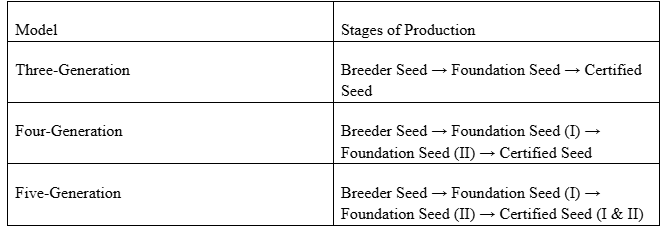
Seed Multiplication Models
Seed multiplication is organized into models to ensure the continuous production of high-quality seeds.
Conclusion
Seed certification is vital for sustaining agricultural productivity and ensuring food security. Certified seeds offer reliability and quality that support farmers' yields and the resilience of crops. By following certified standards, the agricultural sector ensures that farmers receive dependable seeds for optimal production.