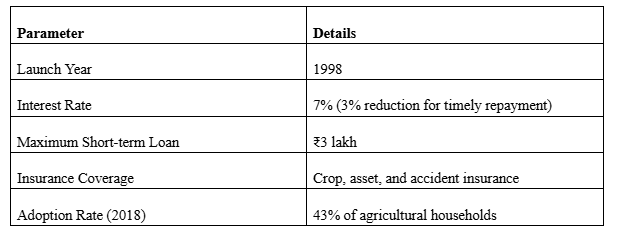


The Kisan Credit Card (KCC) scheme is a transformative initiative designed to provide Indian farmers with easy access to credit. Launched in 1998 by the Government of India, the KCC aims to address the diverse financial needs of farmers while simplifying the borrowing process. Here’s a detailed overview of its features, benefits, challenges, and impact on the agricultural sector.
Key Highlights of the Kisan Credit Card Scheme
The scheme is intended to provide adequate and timely credit support under a single window to farmers for:
• Cultivation and post-harvest expenses.
• Produce marketing loans.
• Household consumption requirements.
• Maintenance of farm assets and allied activities like dairy and fisheries.
• Long-term investments in agricultural infrastructure.
Features and Benefits
General Features
• Single-window system: Covers multiple credit needs, including crop loans, term loans, and consumption credit.
• Flexible usage: Funds can be withdrawn through ATMs, bank branches, or input shop POS machines.
• Validity: Credit card validity of 3–5 years, subject to renewal.
Financial Aspects
• Interest Subvention Scheme: Short-term crop loans up to ₹3 lakh are eligible for an interest subvention of 7%, with an additional 3% reduction for timely repayment.
• Insurance: Options for crop, asset, and accident insurance, with premiums payable through the KCC account.
• Built-in cost escalation: Credit limits are adjusted annually for inflation and cost increases.
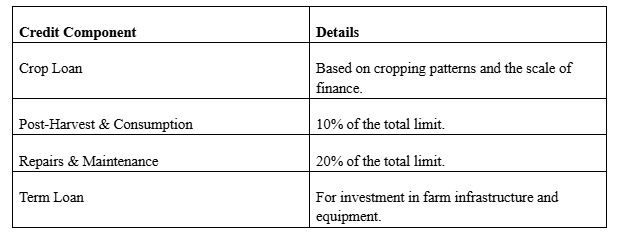
Credit Component Details
Eligibility and Coverage
The KCC scheme caters to:
• Individual farmers or joint borrowers who are landowners.
• Tenant farmers, oral lessees, and sharecroppers.
• Self-help groups (SHGs) or joint liability groups (JLGs) engaged in farming.
Fixation of Credit Limits
The credit limit is calculated based on factors such as cropping patterns, scale of finance, and asset maintenance costs:
- Marginal Farmers: Flexible limits from ₹10,000 to ₹50,000, addressing small-scale investment needs.
- Other Farmers: Higher limits based on farm area, cropping intensity, and long-term investment requirements.
Challenges in Adoption
Despite its numerous benefits, the KCC scheme faces several challenges:
1. Low Adoption Rates: Only 43% of agricultural households have an active KCC. Coverage is especially poor in eastern states.
2. Reliance on Informal Credit: High transaction costs and travel expenses discourage farmers from formal banking.
3. Awareness Gaps: Many farmers remain unaware of the scheme’s full range of benefits.
4. Regional Disparities: Limited adoption in poorer regions with high dependence on agriculture.