

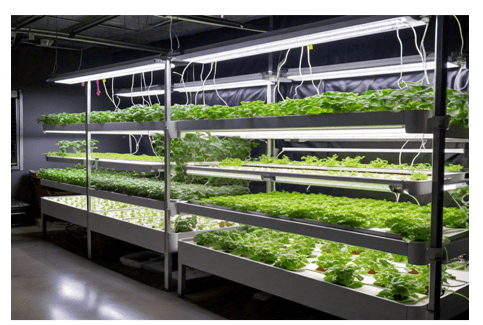
Definition
Hydroponics, a soilless farming technique using mineral nutrient solutions in water, is gaining traction as a sustainable alternative to traditional soil-based agriculture. This method offers significant advantages regarding resource efficiency and yields, particularly for urban farming and areas with limited arable land. However, while it holds promise, hydroponics also comes with unique challenges, from high initial costs to technical expertise requirements.
Types of hydroponics systems
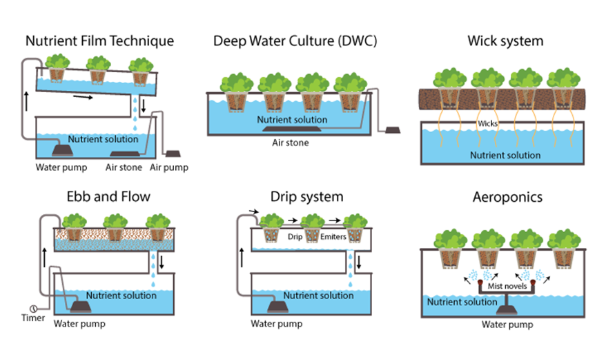
Aeroponic Systems: Plants’ roots are suspended in air and misted with nutrient-rich water, promoting faster growth. Though efficient and highly oxygenated, these systems have higher setup costs and are suited for rapid-growth plants.
Deep Water Culture (DWC): Plants in net pots have roots immersed directly in a nutrient solution. An air pump oxygenates the water, making it easy to maintain and ideal for leafy greens, but sensitive to oxygen and temperature levels.
Nutrient Film Technique (NFT): In NFT systems, a thin layer of nutrient solution flows over plant roots in sloping channels, providing oxygen and nutrients. It’s ideal for lightweight plants, like herbs and strawberries, and is popular with commercial growers.
Wicking Systems: Using a wick to transport nutrients from a reservoir, this simple, electricity-free system works best for small plants, such as herbs. However, it cannot support plants with high water needs.
Drip Systems: Nutrients are delivered via tubes and emitters, offering precise control over nutrient delivery and growing conditions. Drip systems can support large plants, like melons, but require regular maintenance, making them popular in commercial setups.
Ebb and Flow (Flood and Drain): Plants in a container are periodically flooded with nutrients and then drained. This system, though complex and costly, encourages healthy plant growth by providing ample oxygen and nutrients.
Advantages of Hydroponics
Hydroponics offers several advantages that make it an attractive option for sustainable farming:
- Efficient Water Use: Hydroponic systems use up to 90% less water than traditional soil-based agriculture due to their closed-loop systems that recycle water.
- Space Efficiency: Vertical hydroponic systems allow for higher plant density, making it ideal for urban areas with limited space.
- Higher Yields: Plants grow faster and yield more produce due to the controlled nutrient supply and growing conditions.
- Reduced Pesticide Use: The controlled environment reduces pest and disease outbreaks, lowering the need for pesticides.
- Consistent Quality: Hydroponics ensures uniformity in crop size and quality due to precise control over growth conditions.
Challenges of Hydroponics
While hydroponics is promising, it faces challenges that need addressing for broader adoption:
- High Initial Costs: Setting up a hydroponic system can be expensive due to the need for equipment like grow lights, pumps, and nutrient reservoirs.
- Energy Intensive: Artificial lighting, climate control, and other technological needs make hydroponics energy-intensive, impacting sustainability.
- Technical Expertise: Hydroponics requires specialized knowledge in system maintenance, nutrient management, and pest control.
- Pest and Disease Risks: While soil-borne issues are minimized, water-borne pathogens and airborne pests can spread quickly within the system.
- Limited Crop Variety: Some crops, especially those with extensive root systems, are not well-suited for hydroponic growth.
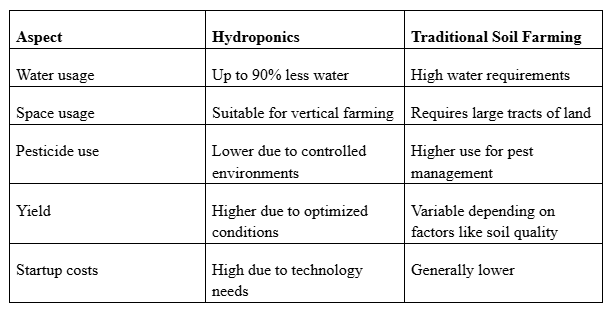
Comparative Analysis: Hydroponics vs. Traditional Soil Farming
Future Prospects
The future of hydroponics is promising, with technology advancements and climate resilience offering new possibilities. Key areas of focus include:
- Climate Resilience: Hydroponics can offer stable food production despite climate change impacts like extreme weather and water scarcity.
- Resource Efficiency: Through efficient use of water and nutrients, hydroponics can support a growing population sustainably.
- Urban Agriculture: By facilitating food production in urban areas, hydroponics reduces food miles and supports local food security.
- Integration with Renewable Energy: Solar and wind energy can be used to power hydroponic systems, reducing reliance on fossil fuels.
Conclusion
Hydroponics presents a viable solution for sustainable agriculture, offering advantages in resource use, yield, and adaptability to urban spaces. With advancements in technology and support from governments, hydroponic systems could play a key role in future food security. However, addressing the challenges of high setup costs, energy needs, and technical demands is essential to unlock its full potential.