


The Rise of E-commerce in Agriculture
The agricultural sector is witnessing a transformation with the adoption of e-commerce. As digital platforms evolve, e-commerce in agriculture provides farmers, wholesalers, and consumers with new ways to trade, reducing costs, increasing efficiency, and offering a more diverse market reach. Below, we explore the types of e-commerce models, market entry strategies, enablers, and the benefits that agri e-commerce brings to both developed and developing markets.
E-commerce in Agriculture
Agri e-commerce enables the buying and selling of agricultural products through digital platforms, streamlining transactions between farmers, buyers, and consumers. It helps address long-standing challenges like fragmented supply chains and the quick perishability of produce. In developed markets, this model is rapidly evolving, allowing consumers to purchase directly from producers, improving price transparency, reducing middlemen, and ensuring fresher, traceable food.
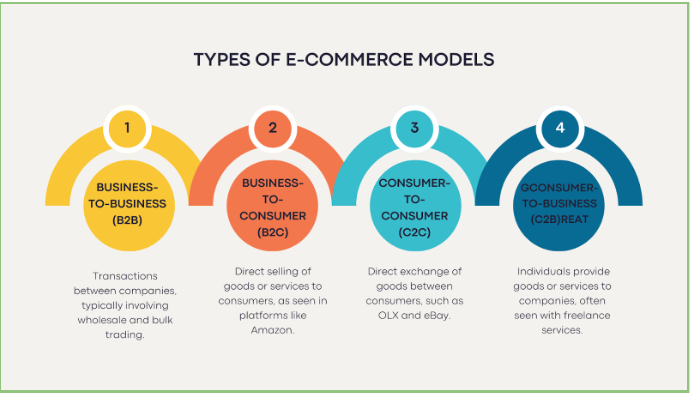
Types of E-commerce Models
E-commerce can be categorized into the following four models:
Agri E-commerce Market Entry Strategies in Developed Markets
As e-commerce expands, several strategies are emerging for entering agri-e-commerce markets in developed regions. Common approaches include:
- Established e-commerce platforms expanding to grocery sales (e.g., Amazon Fresh, Alibaba).
- Traditional grocery stores are developing online channels, combining physical stores with digital solutions (e.g., Waitrose-Ocado in the UK).
- Pure-play agri e-commerce businesses directly connecting farmers and consumers (e.g., Farmstead, Riverford).
Benefits of Agri E-commerce
Agri e-commerce offers several transformative advantages for the farming ecosystem:
- Minimized Post-Harvest Losses
Streamlined supply chains help reduce spoilage and wastage, especially of perishable produce.
- Better Price Realization for Farmers
By cutting out middlemen, farmers can sell directly to buyers and earn fair, transparent prices.
- Enhanced Financial Access
Digital payments and transaction records enable farmers to build credit histories, improving access to loans and financial tools.
- Boosted Productivity & Quality
Increased market transparency and competition encourage farmers to adopt better practices and produce higher-quality goods.
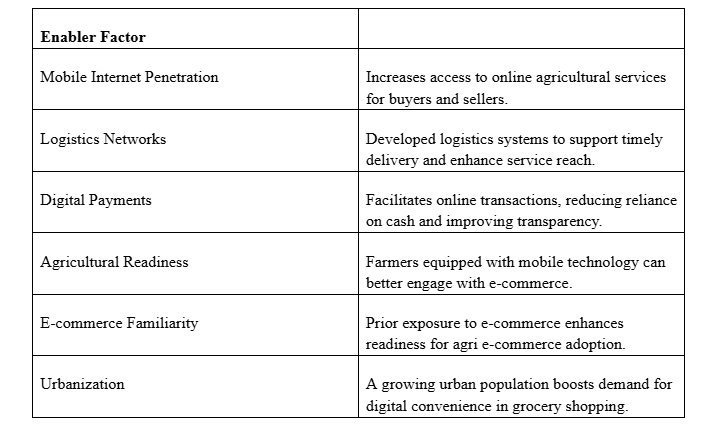
Key Enablers of Agri E-commerce
In conclusion, the agri e-commerce sector continues to grow as digital solutions address barriers in the agricultural supply chain. With improved infrastructure, technology, and digital literacy, agri e-commerce could revolutionize access to markets for farmers globally, enabling fairer prices, reducing wastage, and fostering financial inclusion.