

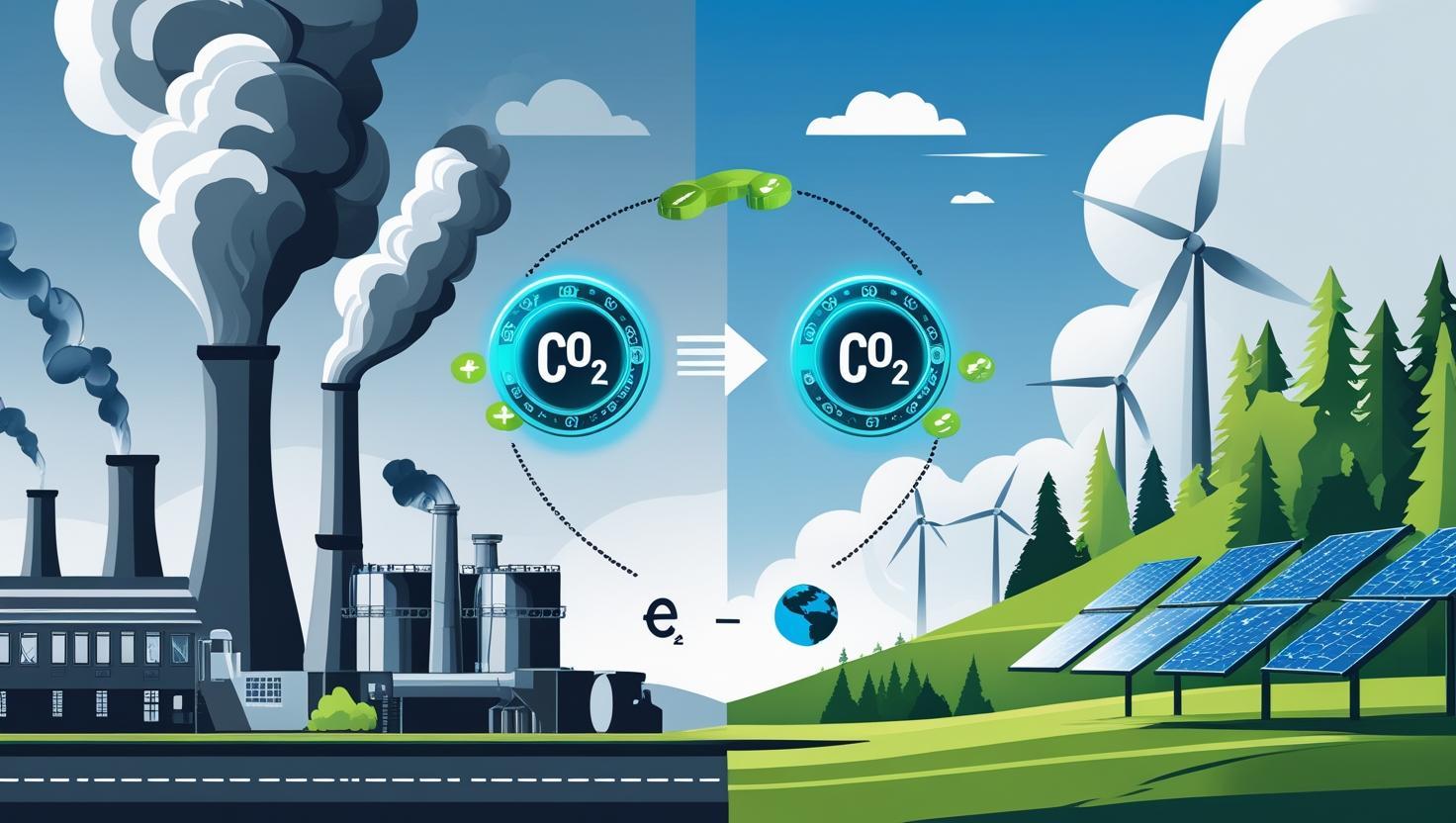
Carbon trading is a market-driven approach to controlling greenhouse gas emissions. It allows companies or entities to buy and sell emission credits, where each credit permits a certain amount of carbon dioxide (CO₂) or other greenhouse gases (GHGs) to be released.
Organizations that emit less than their quota can sell their unused credits to others—creating a financial reward for reducing emissions. This system not only promotes cleaner, greener practices but also supports global climate goals through economic incentives.
Types of Carbon Markets
Carbon markets are divided into two main types:
1. Compliance Markets
- Mechanism: Compliance markets involve strict regulations requiring companies to buy or sell emission credits. These markets are often managed at the national or regional level, where each emission credit has value because it allows a company to emit a certain amount of CO₂.
Examples:
- EU Emissions Trading System (ETS): One of the largest and first global carbon markets.
- California Cap-and-Trade Program
- Clean Development Mechanism (CDM): Part of the Kyoto Protocol.
- Regional Greenhouse Gas Initiative (RGGI): A cooperative effort among multiple U.S. states.
2. Voluntary Markets
- Characteristics: Voluntary markets are typically not regulated by the government. Instead, private entities and NGOs often set standards and ensure verification.
- Growth: As more companies aim to meet sustainability goals, demand for credits in voluntary markets is increasing.
Market Size (2021)
EU Emissions Trading System (EU ETS)
Launched in 2005, the EU ETS is one of the world’s largest and most influential carbon markets, operating as a key compliance mechanism to reduce greenhouse gas emissions.
Coverage:
Applies to major sectors such as:
Power generation
Industrial manufacturing
Aviation
Maritime transport
(Covering EU nations along with Iceland, Liechtenstein, Norway, and Switzerland)
How It Works (Cap-and-Trade Model):
A total emissions cap is set by the government.
Companies receive or buy emission allowances, each permitting them to emit 1 tonne of CO₂.
The cap is gradually reduced each year, pushing companies to lower their emissions or buy additional credits from others.
Impact:
Since its launch, the EU ETS has led to a 47% reduction in emissions from power and industrial sectors — proving its effectiveness in driving climate action.
How to Produce Carbon Credits
Generating carbon credits involves implementing practices or projects that reduce, capture, or offset emissions. Companies create credits by:
- Clean Energy Initiatives: Transitioning to renewable energy sources, such as wind, solar, or hydroelectric power, reduces reliance on fossil fuels.
- Energy Management: Improving energy efficiency in operations and using advanced technologies to reduce waste and emissions.
- Carbon Sequestration: Capturing CO₂ from the atmosphere and storing it in soils, forests, or geological formations.
- Afforestation and Reforestation: Planting trees that naturally absorb and store CO₂ over their lifetime.
Carbon Credit Verification Process
The carbon credit verification process ensures that emission reduction projects are legitimate, measurable, and effective. Verified credits give buyers confidence that their investments are making a real climate impact. The process involves the following key steps:
1. Project Planning & Documentation
Developers submit detailed plans outlining the project’s goals, methods, location, and expected emissions reductions. This documentation proves how the project will deliver measurable climate benefits.
2. Third-Party Verification
Accredited agencies (e.g., Verra, Gold Standard, American Carbon Registry) review project documents and conduct on-site audits to ensure the project is sound and credible.
3. Establishing a Baseline
A GHG baseline is set—representing emissions that would occur without the project. This serves as the benchmark for calculating actual reductions.
4. Monitoring & Data Collection
Ongoing monitoring tracks the project’s emissions performance. Accurate data ensures transparency and helps verify true reductions.
5. Verification Report
The verifier prepares a formal report summarizing findings, noting any corrections or adjustments needed to ensure credibility.
6. Credit Issuance & Registry Entry
Once verified, credits are issued and recorded in a recognized carbon registry, ensuring secure tracking and transparency.
7. Ongoing Monitoring
Periodic audits and reviews maintain long-term compliance and integrity of the project over time.
Benefits of Carbon Trading:
1. Economic Incentives for Emission Reduction
Carbon trading puts a price on emissions, motivating companies to reduce their carbon footprint. By earning credits, companies can not only avoid costs but potentially profit by selling surplus credits, creating a financial incentive to adopt cleaner technologies.
2. Flexibility for Businesses
Unlike rigid emission reduction targets, carbon trading allows companies to choose how they meet environmental goals. They can invest in internal improvements or purchase credits if it’s more cost-effective, offering them flexibility while still working towards net-zero targets.
3. Encouragement of Innovation
The market encourages innovation in sustainable technologies. Companies are pushed to explore carbon capture, renewable energy, and efficient production methods, ultimately driving advancements in environmental technology.
4. Environmental Impact on a Global Scale
Carbon trading systems often cross borders, as seen with the EU ETS, creating a collective effort toward reducing emissions. This shared framework allows nations and companies worldwide to work together on a common environmental goal.
5. Revenue for Climate Action
Revenues generated from the sale of credits or penalties in compliance markets often fund climate initiatives, like reforestation projects or renewable energy programs, further supporting sustainable development.
Challenges of Carbon Trading
1. Market Price Fluctuations
The price of carbon credits can vary significantly, impacting companies’ willingness to invest in long-term emission reductions. Low credit prices may reduce incentives, while high prices could put financial strain on companies, especially smaller ones.
2. Complex Verification and Compliance
The process for verifying and monitoring carbon credits is rigorous and complex, requiring third-party verification and ongoing checks. This can be costly and time-consuming, and it can be challenging to maintain consistent standards across countries.
3. Risk of
Carbon leakage occurs when companies relocate operations to countries with looser emissions standards to avoid the costs of carbon trading. This shift can lead to an overall increase in global emissions rather than reducing them.
4. Potential for Greenwashing
In voluntary markets, companies may claim to offset emissions without meaningful reductions. If not carefully monitored, carbon trading could be misused as a tool for greenwashing, allowing companies to appear eco-friendly without actual impact.
5. Limited Impact on Certain Sectors
Some industries, like agriculture or shipping, are challenging to decarbonize. Carbon trading alone may not fully address these sectors’ emissions, and they may require more tailored solutions beyond the trading market.
Conclusion
Carbon trading offers a dynamic tool for addressing global climate challenges by incentivizing emissions reduction. Through compliance and voluntary markets, businesses worldwide are given the flexibility to meet their climate goals. As carbon markets expand, understanding these systems allows businesses and individuals to make informed, sustainable choices.