

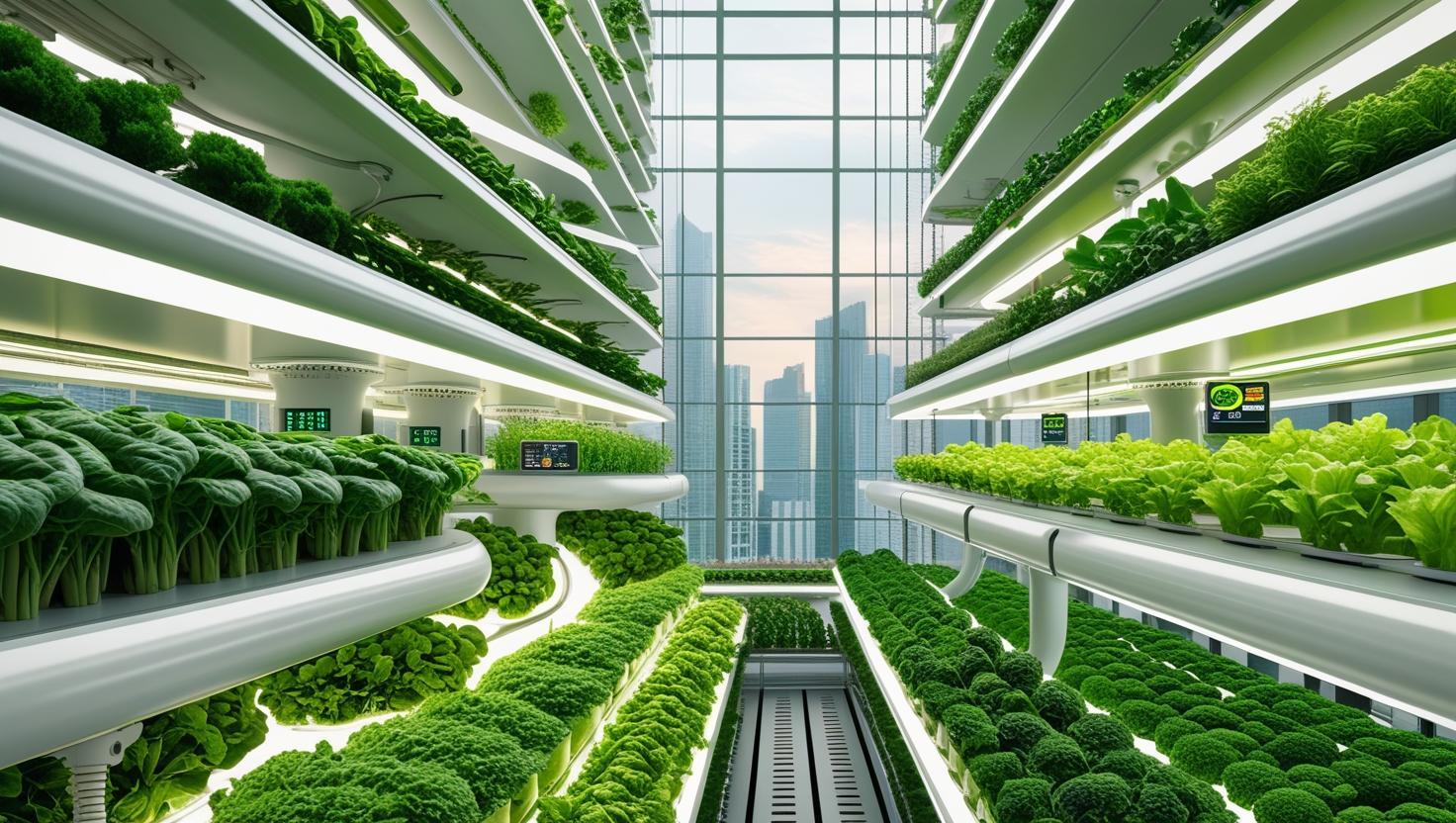
Earth’s landmass makes up just 27% of the planet, with the rest covered by water (73%). Only about three-fourths of this land is productive; the rest consists of mountains, deserts, and other non-arable areas. Over time, 57% of the productive land has been converted for crop cultivation, often at the expense of forests and grasslands (43%). With urbanization increasing, it’s projected that by 2030 over 60% of the global population will live in cities. Meanwhile, the world population is expected to grow from 7.6 billion to 8.6 billion by 2030, reaching 9.8 billion by 2050 and 11.2 billion by 2100. This rapid urbanisation is straining limited arable land.Vertical farming offers a sustainable solution by maximizing crop production within urban spaces, thus addressing both the scarcity of land and the demands of rising populations.
What is Vertical Farming?
Vertical farming involves growing crops in vertically stacked layers, often integrated within buildings or warehouses. This method uses controlled environments, allowing crops to grow in minimal space without soil. Technologies like hydroponics, aeroponics, and LED lighting systems are commonly utilized to optimize plant growth and yield.
Needs of Vertical Farming
- Food Security: Ensures reliable food supply in urban areas.
- Climate Change: Provides resilience against extreme weather.
- Urban Density: Maximizes limited city space.
- Ecosystem: Reduces land degradation.
- Economics: Cuts transport costs, and supports local markets.
- Health: Reduces pesticide use, improving produce safety.
Media Used in Vertical Farming
The media in vertical farming are selected to support soilless cultivation and enhance plant growth. Common options include:
- Perlite: A volcanic rock derivative that enhances aeration and drainage.
- Vermiculite: A mineral-based medium with high water retention.
- Coconut Coir: Made from coconut husks, it is a renewable and organic option ideal for water retention.
- Peat Moss: Retains moisture well, especially suitable for tropical plants.
- Sand: Provides a loose, porous medium suited for root crops like carrots and potatoes.
- Rock Wool: Popular in hydroponic systems, this fibrous medium supports capillary action for nutrient distribution.
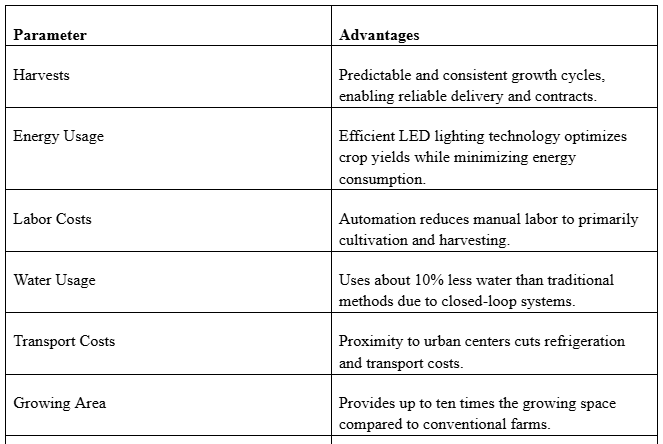
Advantages of Vertical Farming Systems
Working of Vertical Farming
Vertical farming operates using carefully controlled environments. Key elements include:
- Physical Layout: Crops are grown in vertically stacked layers, maximizing space usage.
- Lighting: Artificial LED lighting provides controlled wavelengths ideal for photosynthesis.
- Growth Medium: Soil is often replaced by hydroponic (water-based) or aeroponic (mist-based) systems.
- Sustainability Features: Efficient water use, renewable energy integration, and reduced pesticide use contribute to the system's environmental benefits.
Challenges for Sustainability of Vertical Eco-Farming
Despite its advantages, vertical farming faces several challenges:
- High Energy Requirements: Artificial lighting and environmental control systems require significant energy, which can be costly and may reduce overall sustainability.
- Water Quality Management: Effective water filtration is essential to remove contaminants in closed-loop systems.
- Nutrient Management: Monitoring nutrient levels to ensure optimal growth is crucial but challenging, requiring careful calibration.
- System Vulnerability: Any malfunction in lighting or irrigation systems could lead to rapid crop loss.
- Initial Investment Costs: High setup costs make vertical farming less accessible for small-scale farmers.
Conclusion
Vertical farming presents a promising solution to address urban food security, optimize land usage, and reduce the environmental impact of food production. By utilizing advanced technologies and controlled environments, it offers potential to revolutionize agriculture in urban centers. However, addressing energy, cost, and sustainability challenges remains essential for realizing its full potential.