

Seeds are the foundation of agriculture, carrying the genetic potential of plants and serving as a crucial resource for farmers. Seed technology has advanced over the years to enhance crop yields, maintain food security, and support agricultural rehabilitation after natural disasters. In this blog, we’ll explore what seeds are, their types, characteristics, and the critical role they play in agriculture.
What is a seed?
A seed is a fertilized, mature ovule that contains an embryonic plant along with stored food, all enclosed within a protective coat. It represents the end result of the reproductive process in seed plants, beginning from the development of flowers and pollination, leading to fertilization and growth within the parent plant.
Types of seeds
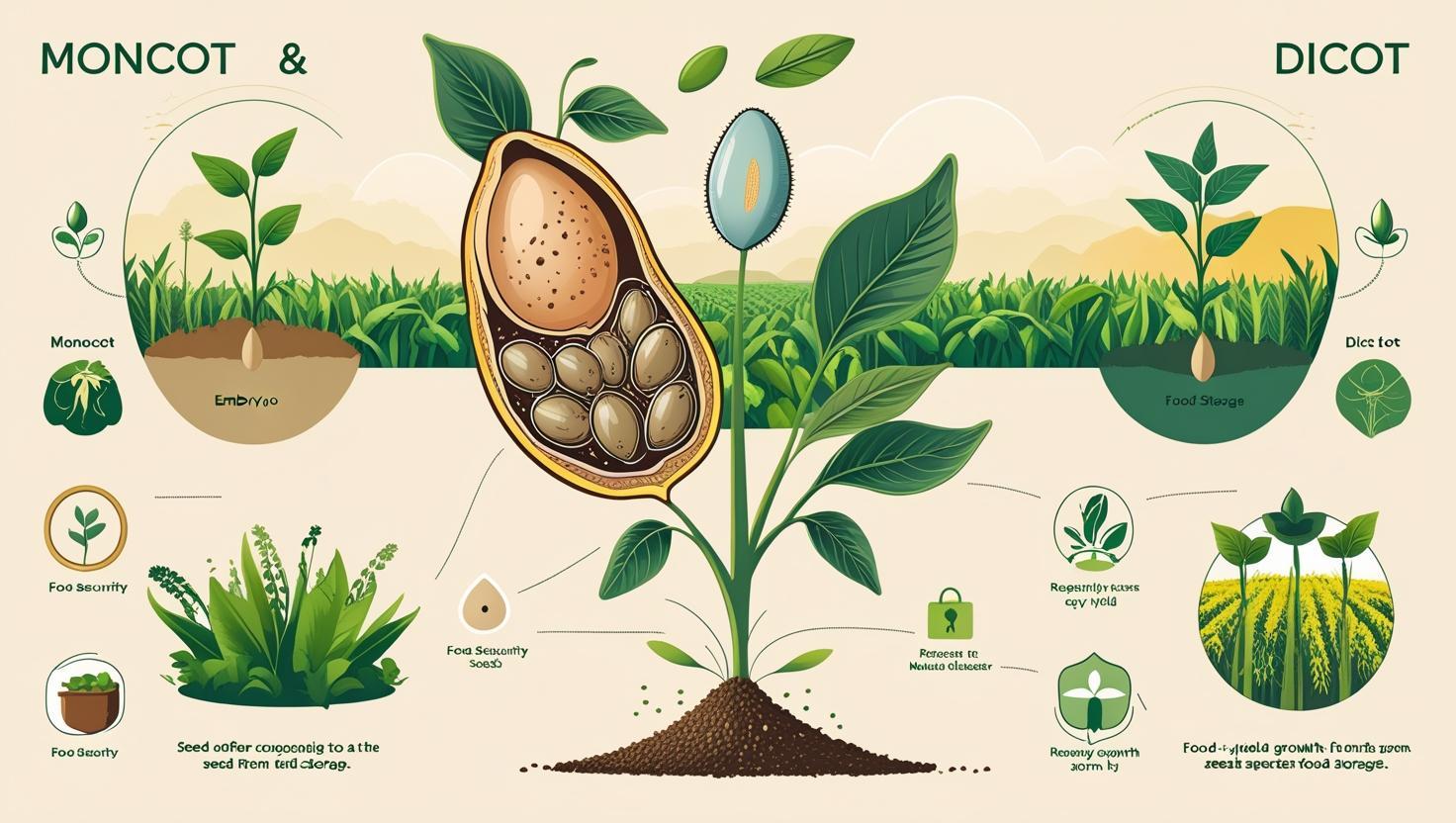
Seeds are categorized based on the number of cotyledons (seed leaves):
• Monocotyledonous Seeds: Seeds with one cotyledon, such as rice, maize, and orchids.
• Dicotyledonous Seeds: Seeds with two cotyledons, including peas, beans, mangoes, and mustard.
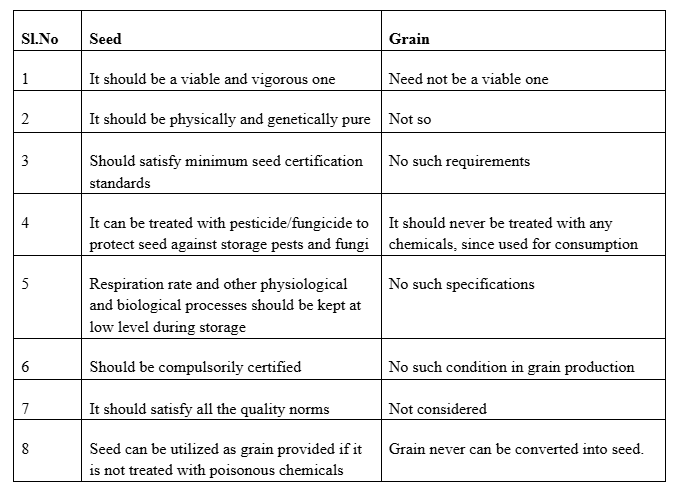
Seed vs. Grain
While seeds and grains are often used interchangeably, there are distinct differences between the two.
Importance of seeds in agriculture
Seeds are vital in agriculture for several reasons:
• Carrier of New Technology: Seeds of high-yielding varieties significantly improve food production. For instance, in India, the introduction of high-yielding seeds raised food production from 52 million to 180 million tons over 40 years.
• Basic Tool for Food Security: Hybrid and high-yield varieties have increased crop productivity, providing a stable food supply.
• Ensures Crop Yields in Adverse Areas: Quality seeds adapted for specific regions help maintain yields in challenging environments.
• Rapid Rehabilitation Post-Disaster: Seed reserves ensure quick recovery from natural disasters by providing seeds for re-sowing.
Characteristics of good quality seeds
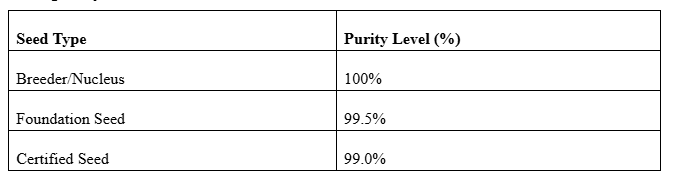
Good quality seeds are essential for optimal yields. They should be genetically and physically pure, have high viability, and conform to certification standards. The table below illustrates these purity levels.
Seed purity levels
Goals of seed technology
The primary goal of seed technology is to ensure a timely supply of high-quality seeds at reasonable prices. Key objectives include:
• Rapid multiplication of superior varieties
• Timely distribution to farmers
• High-quality assurance standards
• Affordable pricing for accessibility
Seed dormancy
Seed dormancy is a natural mechanism that delays germination, allowing seeds to survive under unfavorable conditions. There are two types of dormancy:
• Innate Dormancy (Primary): Dormancy is induced before or during the maturation of the seed.
• Secondary Dormancy: Occurs in mature seeds due to environmental conditions that are unfavorable for germination.
Conclusion
Seed technology plays a critical role in modern agriculture by enhancing crop production, ensuring food security, and supporting quick agricultural recovery following natural disasters. High-quality seeds bring forth innovation, enable sustainable agriculture, and provide hope for farmers in every planting season.