

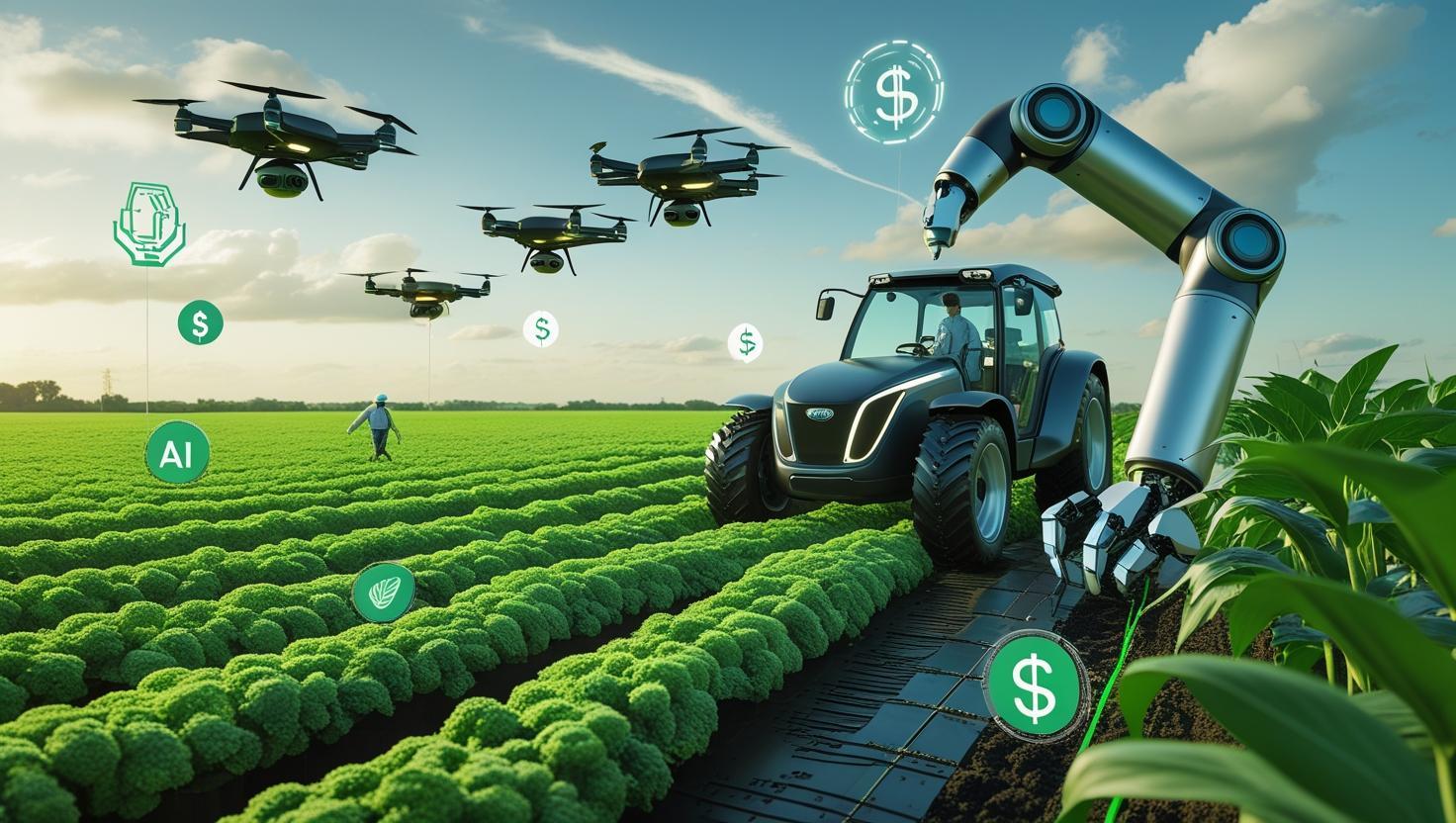
Agriculture is evolving rapidly, thanks to the advancement of automation and robotics. These technological breakthroughs not only make farming more efficient but also address the pressing challenges of labor shortages, environmental sustainability, and the increasing demand for food. This blog explores how automation technologies are transforming farming and the potential economic impact of these changes.
1. The Rise of Agricultural Robots
Automation has transitioned beyond basic machinery to specialized robots capable of handling complex tasks in agriculture. These robots are increasingly essential for various farming activities, from soil preparation to crop monitoring, planting, and harvesting.
Types of Agricultural Robots:
\t- Land Preparation Robots: These robots are designed to help with soil fertilization, pest control, and field preparation, equipped with advanced positioning and navigation systems for accuracy.
\t- Aerial Drones: Used for aerial surveys and crop monitoring, drones fitted with sensors can detect plant health issues early, allowing for precise interventions.
\t- Spraying Robots: Robots designed for precise pesticide application reduce pesticide usage, lower environmental impact, and decrease the likelihood of pests developing resistance.
2. Technologies Boosting Efficiency in Farming
In addition to robots, AI, GPS, and IoT-based sensors are crucial components of modern agriculture. Together, these technologies enable data-driven decisions that enhance productivity and conserve resources.
- Precision Irrigation Systems: These systems use IoT sensors to monitor soil moisture in real-time, optimizing water usage. This approach not only saves water but also supports crop growth more effectively.
- Self-Driving Machinery: Autonomous tractors and other machinery are used for planting, weeding, and harvesting, significantly reducing the need for manual labor. For example, self-driving systems can operate based on real-time data, allowing for optimal timing and accuracy in farming tasks.
3. Economic Impact of Automation in Agriculture
The integration of advanced automation technologies in agriculture brings substantial economic benefits, from cost savings to increased crop yields.
- Projected Yield Increase: By incorporating modern technologies like precision agriculture, crop yields could increase by up to 70%. Given the global crop production value of USD 1.2 trillion in 2015, this improvement could add USD 800 billion by 2050.
- Precision Fertilizer Application: Precision fertilizer application, involving sensors and data analysis, could enhance crop yields by 18% and has a market value of USD 65 billion. This approach minimizes waste, making fertilizer use more efficient and cost-effective.
- Precision Irrigation: Utilizing real-time water sensors, modern irrigation systems can enhance yields by 10% and reduce water wastage by up to 50%. The precision irrigation market alone could be worth USD 35 billion.
- Soil Compaction Reduction: Automated tractors prevent soil compaction, an issue that reduces yields by 15-20%. This mitigation could present a USD 45 billion market opportunity, projected to increase crop yields by 13%.
4. Environmental and Operational Benefits
Automation in agriculture does more than just improve productivity; it also promotes environmental sustainability and efficient resource use.
- Reduced Water and Pesticide Use: With precision spraying and irrigation, robots can apply only the necessary amounts of water and pesticides, reducing waste and environmental runoff. This careful management conserves natural resources and minimizes chemical exposure to both crops and farm workers.
- Cost Savings in Labor: Automation in farming tasks like planting, weeding, and harvesting reduces the need for manual labor, resulting in lower operational costs. For example, in the U.S., labor costs are projected to reach USD 42.09 billion in 2023, and automation could help reduce these expenses substantially by taking on more labor-intensive tasks.
5. Examples of Advanced Robotic Systems in Agriculture
Several specialized robotic systems stand out in agriculture for their targeted applications, each contributing uniquely to modern farming practices:
- Soil Preparation Robots: These robots assist with critical preparatory work such as fertilization and pest management. Their advanced navigation systems ensure precise distribution of resources.
- Seeding Robots: Robots designed for planting can maintain consistent spacing and depth, improving seed germination rates and reducing waste.
- Precision Crop Health Monitors: Robots with sensors and cameras can scan crops to detect health issues, aiding in early intervention and reducing crop loss.
6. Challenges and the Future of Agricultural Automation
While automation brings numerous benefits, there are some challenges to consider. The initial investment in robotic technology can be high, particularly for small-scale farmers. Additionally, maintenance and the need for specialized skills to operate these technologies can present hurdles.
The future holds great promise, however. Innovations like solar-powered autonomous robots and digital twins—virtual models of real-world crops and farms—are on the horizon. These technologies will allow farmers to simulate and refine strategies before implementing them in the field, ensuring that real-world applications are as effective as possible.
Conclusion
The rise of automation and robotics in agriculture is revolutionizing the industry. These technologies offer solutions that increase productivity, reduce costs, and promote sustainability. While there are challenges to widespread adoption, the potential economic and environmental benefits of automation make it a promising path forward. As these technologies continue to develop, agriculture will become more resilient, efficient, and capable of meeting the demands of a growing global population.