

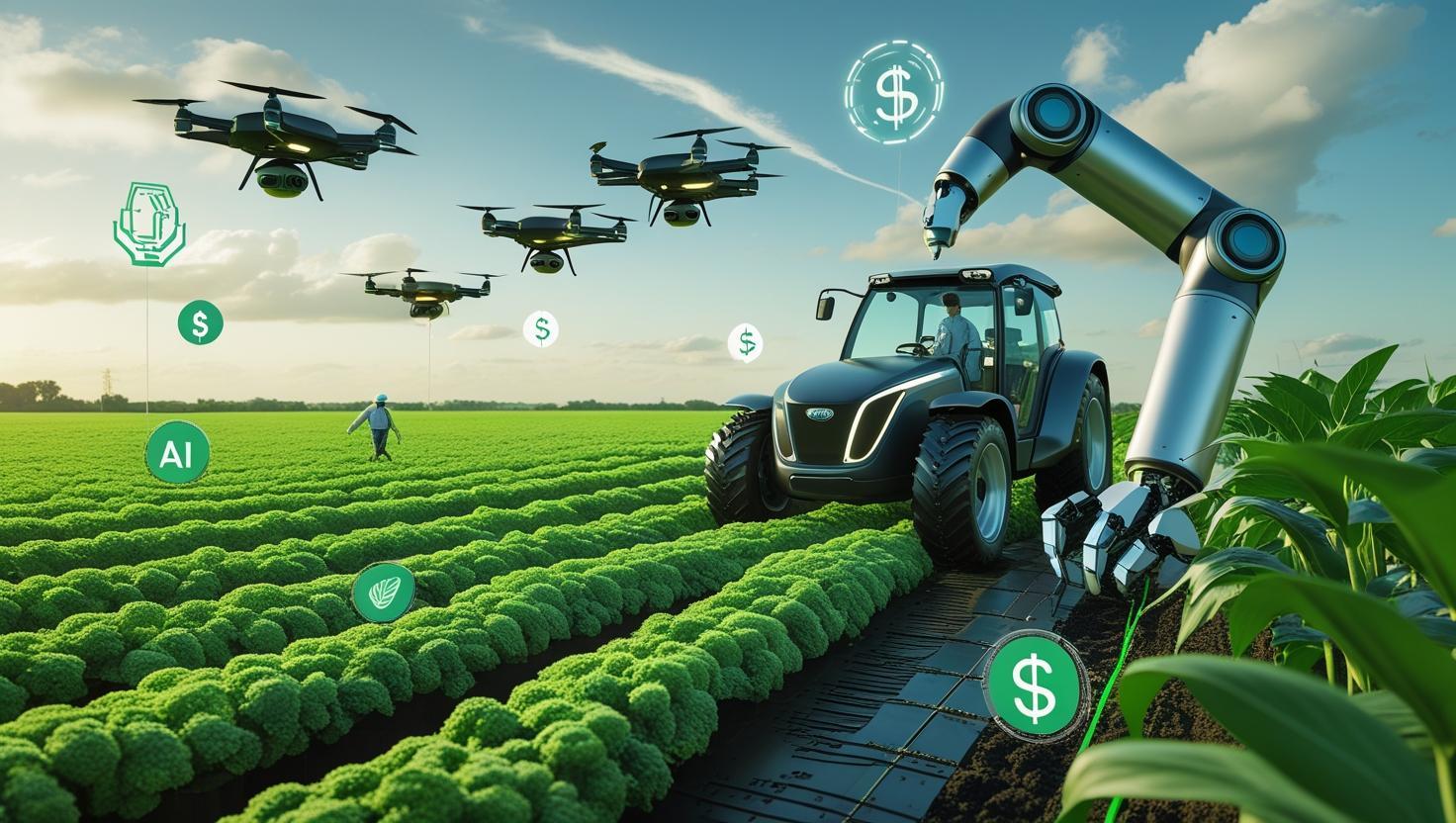
Agriculture is undergoing a transformation driven by the adoption of big data, IoT, and AI. This shift from traditional, manual processes to digital solutions is helping farmers maximize productivity, streamline operations, and ensure sustainability. With the world's growing food demand, big data offers actionable insights and precise management of resources, heralding a new era in farming.
Data and big data
Data refers to information that is collected and processed, which can be categorized into traditional data and big data. Traditional data, typically measured in gigabytes or terabytes, is usually well-structured and can be easily managed with standard data management systems. In contrast, big data is significantly larger, measured in petabytes, zettabytes, or exabytes, and can be structured, semi-structured, or unstructured. Due to its vast size and complexity, big data requires specialized tools and techniques for effective processing and analysis.
Significance of big data in modern agriculture
Big data plays an essential role in optimizing resource use and enhancing productivity. By collecting, analyzing, and applying data insights, farmers can make informed decisions about crop management, predict yields, and manage resources efficiently. The main purpose of big data in agriculture is to support sustainable growth while meeting global food demands.
Key technologies and their applications
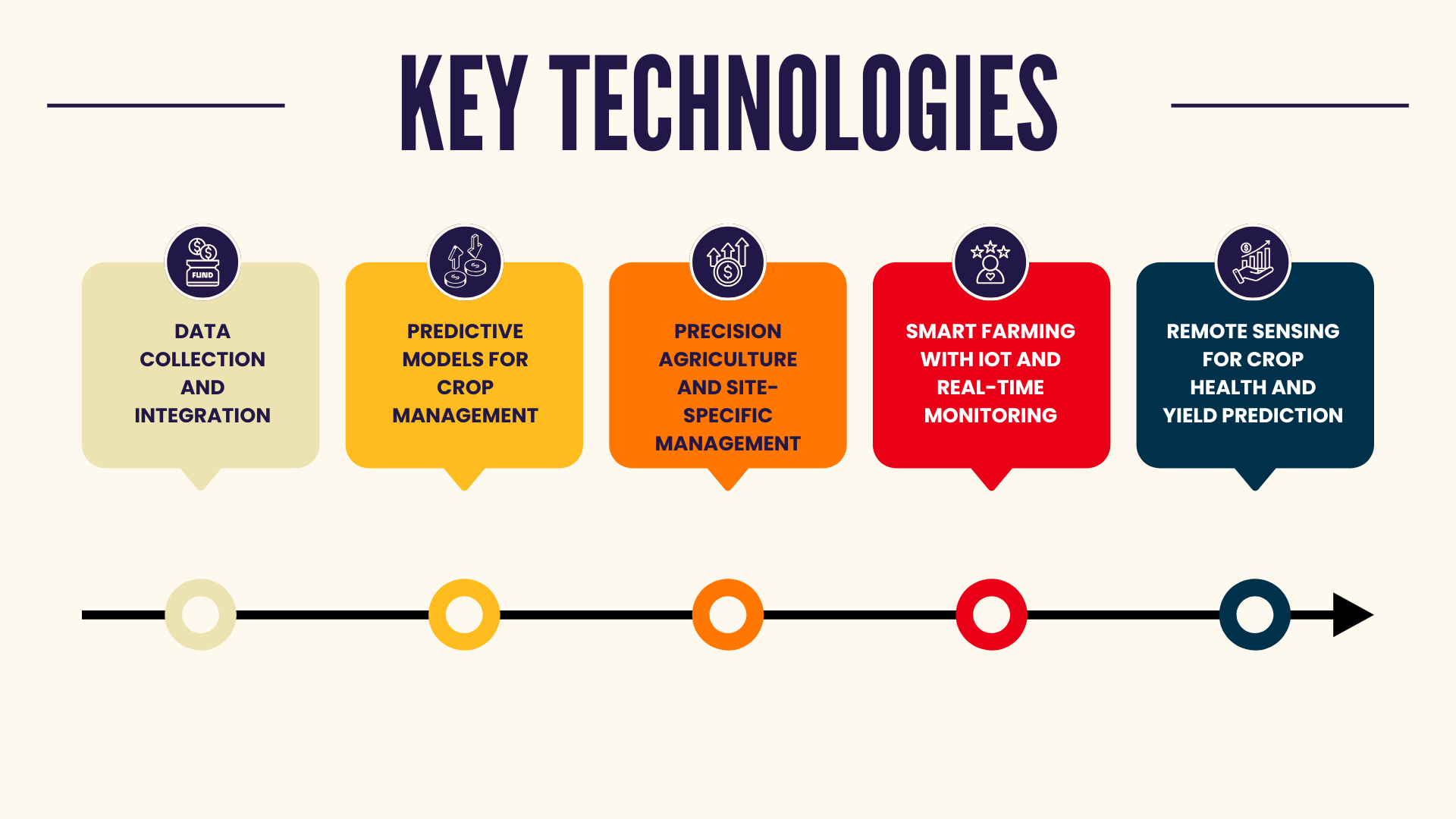
Data collection and integration
Data in agriculture is collected from various sources, including historical crop data, real-time sensor data, GIS mapping, and weather forecasts. This integration enables a comprehensive understanding of factors affecting crop yield and health. Using cloud platforms and distributed databases, vast amounts of information are stored and analyzed for actionable insights.
Predictive models for crop management
One of the primary tools in big data agriculture is the k-means clustering algorithm, which groups data based on similarity. This technique helps analyze environmental data, optimizing crop classification and yield estimation. The MapReduce model further aids in processing large datasets efficiently, making data analysis timely and insightful.
Precision agriculture and site-specific management
Precision agriculture involves using UAVs and remote sensing to monitor specific crop areas. Multispectral imaging on drones identifies crop health, detects weed patches, and pinpoints soil health variations, allowing for targeted interventions. This method conserves resources by reducing blanket pesticide application, supporting environmental sustainability.
Smart farming with IoT and real-time monitoring
IoT devices, such as soil sensors and weather monitors, provide real-time data, automating aspects of crop management. In greenhouses, connected devices help adjust humidity, temperature, and CO2 levels, creating optimal growing conditions that improve crop quality and yield while minimizing resource use.
Remote sensing for crop health and yield prediction
High-resolution satellite imagery enables comprehensive monitoring of crop health and yield predictions. Remote sensing data, paired with AI, allows farmers to detect pest infestations, assess land cover, and predict yields, promoting informed resource allocation and supporting food security.
Yield Improvement through Precision Agriculture: Implementing precision agriculture techniques has led to increased crop yield and optimized resource use in various regions. For instance, using targeted nutrient application based on soil data can result in better growth and lower environmental impact.
Disaster Management: Big data helps in predicting and mitigating the impact of adverse weather events. By analyzing past climate patterns and current weather data, big data technologies enable proactive planning to protect crops from potential damage.
Challenges in implementing big data in agriculture
While the benefits of big data in agriculture are extensive, there are notable challenges. Limited digital infrastructure in rural areas can hinder adoption, and data privacy issues must be addressed. Additionally, integrating these technologies within traditional agricultural practices can be challenging, requiring significant education and investment.
Future directions and sustainable development
The integration of AI and machine learning with big data holds promise for even more accurate crop management and disaster predictions. Efforts should focus on making big data accessible to small-scale farmers, ensuring that technology benefits all sectors of agriculture and promotes equitable growth.
Conclusion
Big data is revolutionizing agriculture by providing farmers with precise, actionable insights. This technology supports sustainable practices, enhances productivity, and aids in meeting global food demands. As the field continues to evolve, embracing big data will be crucial for a resilient and efficient agricultural future.