

Introduction
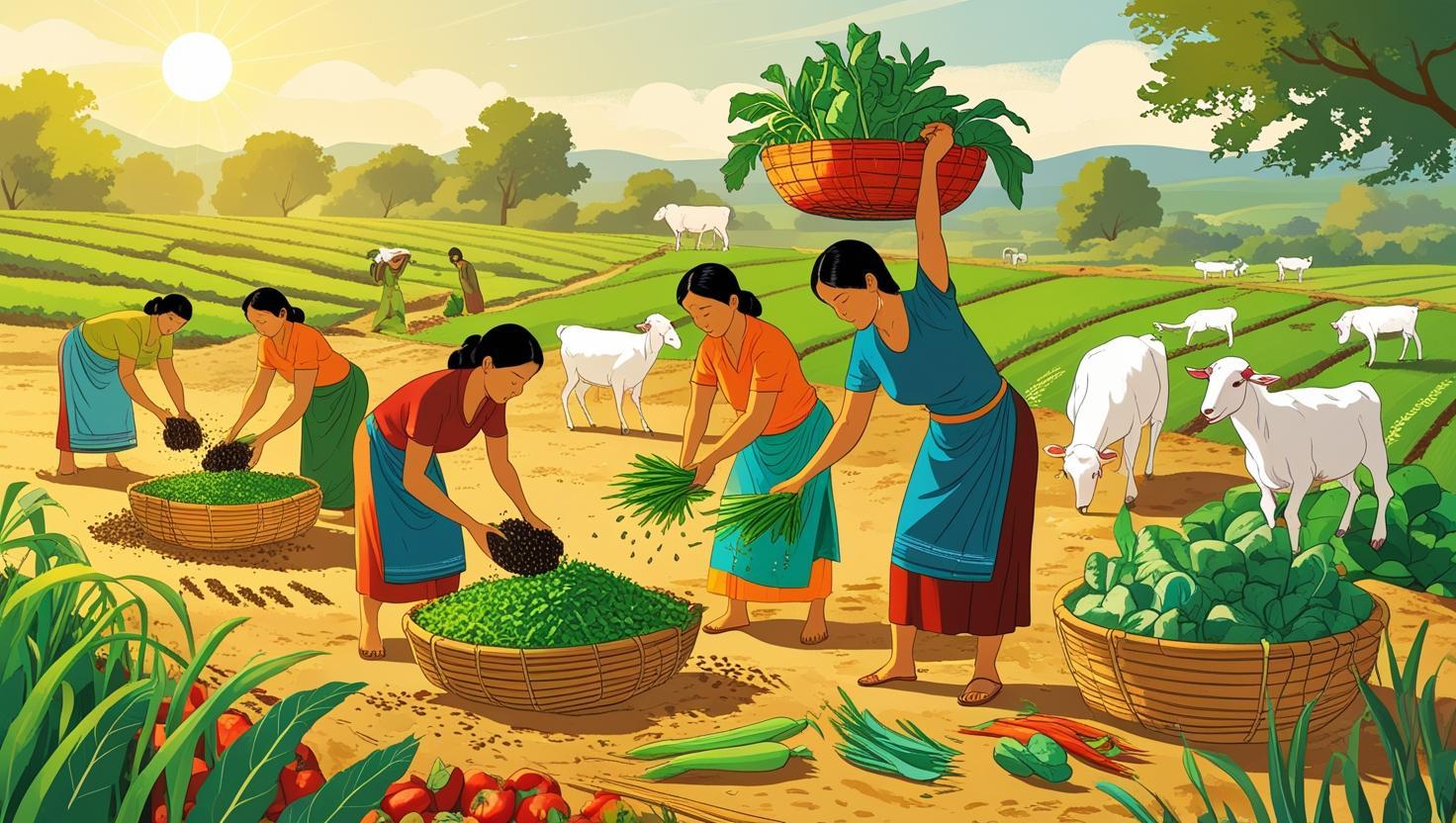
Women play a crucial and often underappreciated role in agriculture. In rural areas, women are not only involved in crop production but also work extensively in animal husbandry, poultry, and fisheries, contributing significantly to household food security and income. Despite their contributions, women still face numerous barriers to equal participation in agriculture, impacting productivity and economic growth.
Key Statistics and Data
According to the 2011 Census:
- 55% of female workers in India were agricultural labourers, and 24% were cultivators.
- Only 12.8% of operational land holdings are owned by women, showing limited control over productive resources.
- Women make up 43% of the agricultural workforce in developing countries, ranging from 20% in Latin America to 50% in Eastern Asia and Sub-Saharan Africa.
- In South Asia, including India, over 60% of women workers are involved in agriculture (FAO, 2010-11), which highlights their high engagement but also their vulnerability in an industry where they lack ownership and decision-making power.
- Globally, 42% of women workers were engaged in agriculture in 2010, down from 53.5% in 1980, indicating a decline but also emphasizing their significant presence in the sector.
Women’s Roles in Agricultural and Allied Sectors
Agriculture
- Sowing, transplanting, and weeding
- Irrigation and fertilizer application
- Harvesting and post-harvest processes like winnowing and storing
- Managing crop production, livestock, food, and cash crops
Livestock Management
- Animal care and cleaning
- Milking, processing milk into products like ghee
- Collecting fodder and preparing dung cakes for fuel
Poultry Farming
- Managing poultry operations at the household level for supplemental income
Fisheries and Aquaculture
- Working in fish farming, processing, and marketing
- 5.4 million women worked in fisheries globally in 2008, representing 12% of the global workforce
Forestry
- Participation in agroforestry, watershed management, and conservation
- Managing tree planting and nursery activities
Feminization of Agriculture
The 2017-18 Economic Survey highlighted the feminization of agriculture, noting the increasing involvement of women as rural men migrate to urban areas. Women are now involved not only as laborers but also as cultivators and entrepreneurs. This shift, however, requires policies that empower them with equal access to resources such as land, water, technology, and credit.
Challenges Faced by Women in Agriculture
- Gender Gap in Resource Access: The 'gender gap' in access to resources is a significant barrier. Women have limited access to land, credit, and inputs like seeds and fertilizers. Empowering women with resources could dramatically increase productivity, reduce poverty, and enhance food security.
- Economic Dependency and Lack of Financial Resources: Many women farmers face economic constraints, limiting their ability to invest in better equipment or agricultural inputs.
- Limited Access to Technology and Knowledge: Women often lack training and exposure to modern farming technologies and techniques, which can hinder their productivity.
- High Labor Intensity with Low Wages: Women often perform labor-intensive tasks for minimal wages, with many working as unpaid laborers on family farms.
Benefits of Empowering Women in Agriculture
- Increased Productivity: Giving women the same resources as men could increase farm yields and overall agricultural productivity.
- Economic Growth: Women’s enhanced participation would contribute to economic development and reduce poverty, especially in rural areas.
- Improved Food Security: With more women empowered, food production and nutritional security at the household level would improve.
Government Initiatives and Recommendations
- Inclusive Agricultural Policies: The need for policies that focus on gender-specific support in agriculture is crucial. This includes access to land, financial resources, and training tailored to women’s needs.
- Awareness Programs: Awareness campaigns on the role and rights of women in agriculture can help change societal attitudes and support women’s empowerment.
- Skill Development and Extension Services: Government initiatives should include technical training for women farmers to help them adopt modern agricultural techniques.
- Financial Inclusion: Access to microfinance and subsidies can empower women to manage their own farms or agricultural enterprises more effectively.
Conclusion
Women are indispensable to the agricultural sector. By empowering them, we can create a more productive, sustainable, and equitable agricultural system. However, achieving this requires a commitment from both the government and society to bridge the gender gap in agriculture. Transformative policies, equal access to resources, and training opportunities will enable women to make even greater contributions to agricultural growth and national development.