

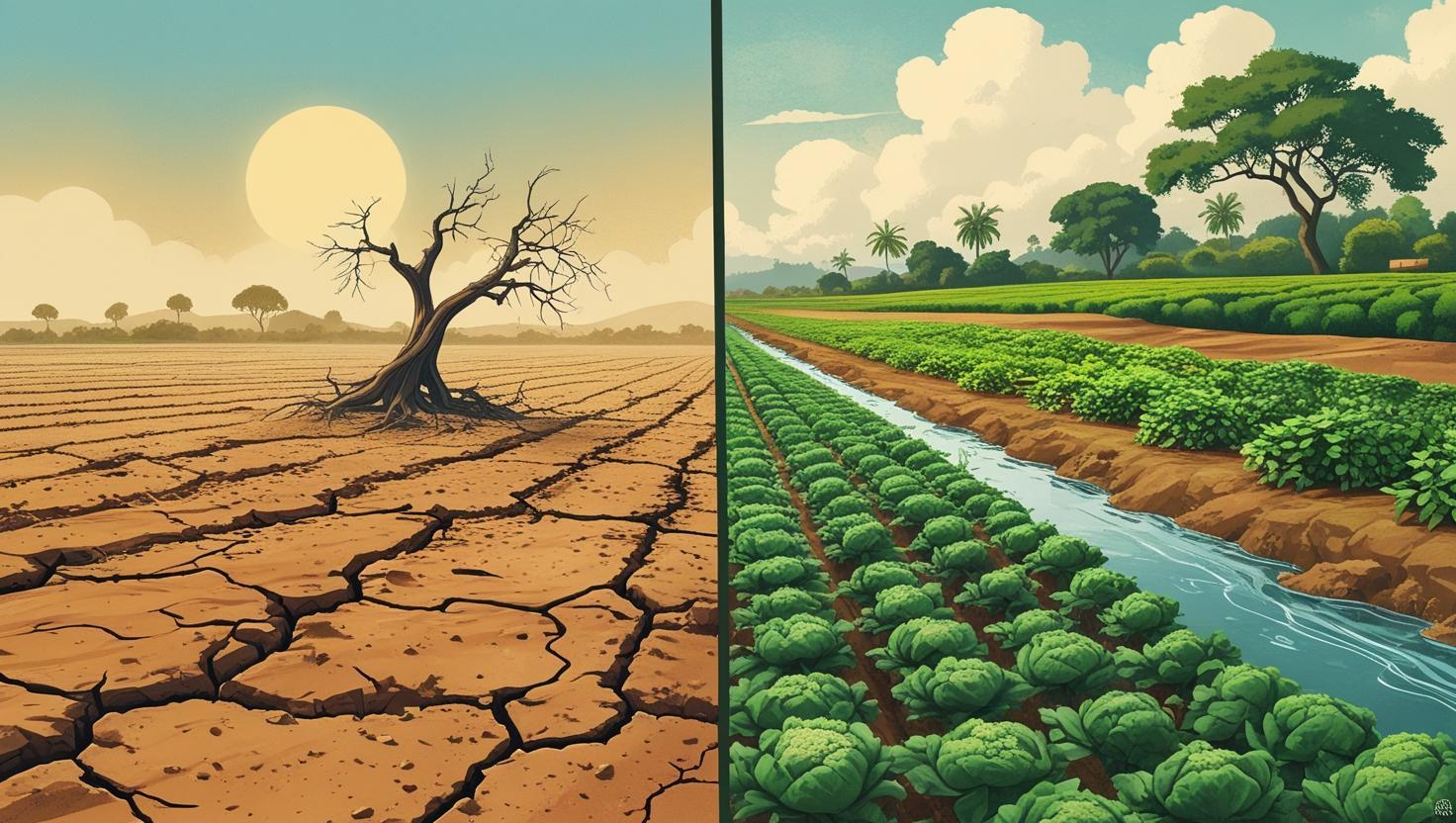
Agriculture is the backbone of India’s economy, providing livelihoods for nearly 70% of the population. However, this sector faces immense pressure due to climate change, which threatens crop yields, food security, and rural income. This article explores the major impacts of climate change on Indian agriculture and highlights the strategies needed to help farmers adapt to these challenges.
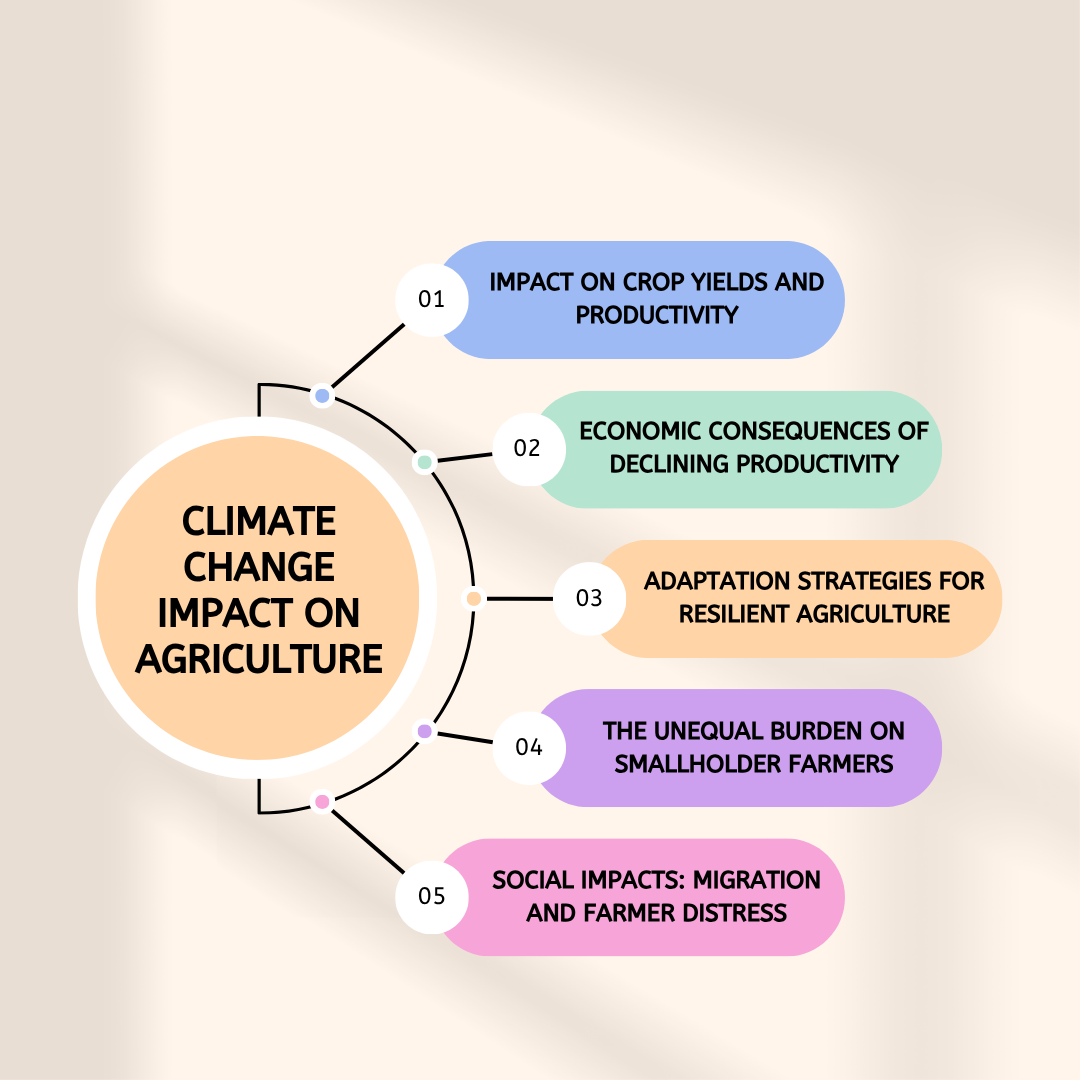
1. Impact on Crop Yields and Productivity
Climate change is directly affecting the yields of important crops in India. With rising temperatures and shifting rainfall patterns, staple crops like rice and wheat are seeing notable declines in productivity. For example, rice yields could drop by 7-10% by the middle of the century, while wheat yields are expected to decrease even further if current trends continue. Such reductions in productivity highlight the vulnerability of Indian agriculture to environmental shifts, making it increasingly important to develop solutions that can withstand these changes.
2. Economic Consequences of Declining Productivity
The economic impact of climate change on agriculture extends far beyond the farm. When crop yields decline, rural incomes shrink, affecting the purchasing power of millions. Additionally, food prices rise, impacting food security across the country. If average temperatures increase by just 2°C, agricultural revenue in India could decrease by as much as 12%. Such losses could have widespread effects on GDP, rural welfare, and overall economic stability.
3. Adaptation Strategies for Resilient Agriculture
To mitigate the effects of climate change, Indian agriculture is adopting several adaptation strategies. Farmers are shifting sowing dates, diversifying their crops, and adopting water-efficient irrigation methods. Furthermore, climate-resilient crop varieties and climate-smart farming practices are becoming increasingly important. Government programs under the National Adaptation Fund on Climate Change aim to support these efforts, helping states develop climate-proof agricultural practices. Such measures are essential to ensure that Indian agriculture can continue to thrive despite a changing environment.
4. The Unequal Burden on Smallholder Farmers
The impacts of climate change do not affect all farmers equally. Smallholder farmers, who make up a large proportion of India's farming community, are particularly vulnerable due to limited resources for adaptation. These farmers often lack the financial means to invest in climate-resilient tools, making them more susceptible to crop failures and income losses. Supporting smallholder farmers with access to resources and adaptive technologies is critical to reducing inequality and ensuring that all farmers have the means to adapt.
5. Social Impacts: Migration and Farmer Distress
Beyond agriculture, climate change has broad social implications for farming communities. Poor crop yields and shrinking incomes are pushing many farmers to migrate to urban areas in search of work. This rural-urban migration can disrupt family structures and weaken rural economies. Additionally, the pressures of climate change contribute to higher levels of farmer distress, leading, in severe cases, to farmer suicides. Addressing these social challenges requires not only agricultural support but also a focus on community well-being and mental health resources.
Conclusion
The impact of climate change on Indian agriculture is profound, influencing everything from crop yields to economic stability and social welfare. While adaptation strategies are being developed, the challenges remain vast. Supporting farmers, especially smallholders, with access to climate-resilient tools, fair policies, and community resources will be crucial in building a resilient agricultural sector. By prioritizing climate-smart agriculture and sustainable adaptation, we can work towards securing food security and safeguarding the livelihoods of millions who depend on farming.