

Introduction
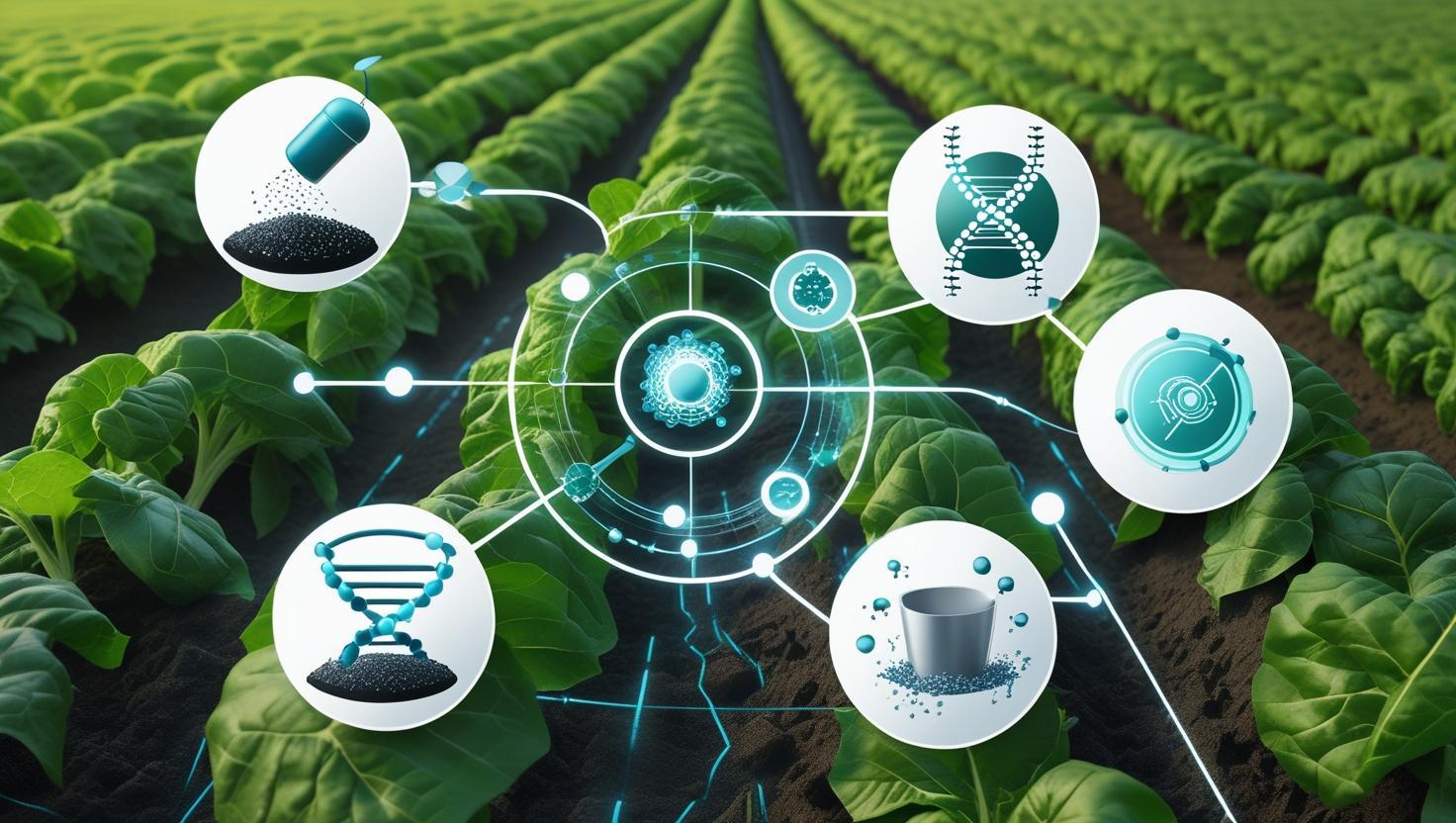
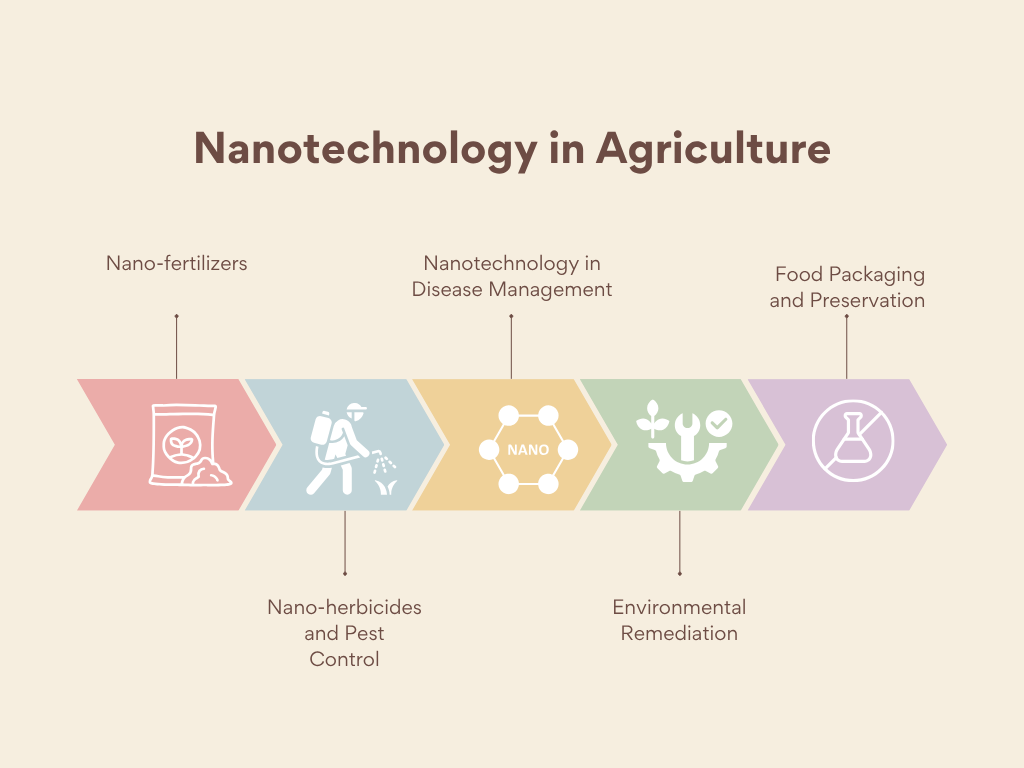
Nanotechnology, the science of manipulating materials at the atomic and molecular scale, is revolutionizing agriculture by addressing challenges like food security, sustainable crop improvement, and environmental conservation. This technology promises significant advancements in modern farming, from nano-fertilisers to nano-based disease control. This blog explores the various applications and potential of nanotechnology in agriculture.
1. Nano-fertilizers
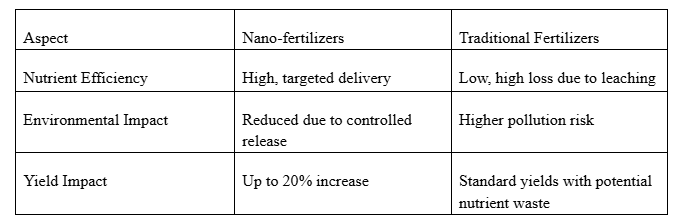
Nano-fertilizers are engineered to improve nutrient efficiency and reduce environmental impact. Traditional fertilizers often result in nutrient loss, with 50-70% nitrogen and 80-90% phosphorus lost to leaching and runoff. Nano-fertilizers enhance nutrient delivery by encapsulating nutrients, allowing controlled release and targeted delivery. Studies show a 20% increase in yield for crops treated with nano-fertilizers, offering a promising alternative to conventional fertilizers.
Comparison of Nano-fertilizers and Traditional Fertilizers
2. Nano-herbicides and Pest Control
Nano-herbicides and nano-pesticides enable precise, controlled application of chemicals, minimizing their impact on non-target plants and soil. By encapsulating herbicides in nanomaterials, release rates are controlled, improving efficacy. Research indicates that nano-herbicides reduce herbicide use by up to 70%, which is beneficial for both crop yields and environmental sustainability.
3. Nanotechnology in Disease Management
Nano-fungicides and nanoemulsions help manage plant diseases more effectively than traditional methods. For instance, nano-silver particles have shown effectiveness against fungal infections in crops, reducing the need for chemical fungicides and supporting healthier, sustainable growth.
4. Environmental Remediation
Nanotechnology aids in the removal of pollutants through nano bioremediation, utilizing nanoparticles to clean soils and water sources. For example, iron nanoparticles can remediate contaminants, improving soil health and crop viability. This method is cost-effective and environmentally friendly.
5. Food Packaging and Preservation
Nanotechnology has transformed food packaging by enhancing food safety and extending shelf life. Nanocomposite materials are used in packaging to reduce microbial contamination and spoilage. For instance, silver and zinc nanoparticles in packaging prevent bacterial growth, ensuring food freshness and safety during storage and transport.
Conclusion
Nanotechnology is paving the way for sustainable agriculture with solutions that address key issues in food production. From nano-fertilizers enhancing crop yields to nano-based packaging preserving food quality, the benefits of this technology are substantial. As researchers continue to explore its potential, nanotechnology could play a vital role in achieving global food security and environmental sustainability.