

Introduction
With modernization now agriculture is not limited only to traditional farming and fields. With advancements in technology and due to global food challenges, the agriculture and food industry is evolving rapidly. Nowadays, employers and organizations are not only looking for individuals holding technical know-how or an academic degree, but they are also looking for those who have good communication skills and problem-solving ability. Now, soft skills are increasingly being recognized as a key differentiator in the competitive corporate world.
If you are planning to work as a farm manager, food technologist, or agronomist, then soft skills can boost your career prospects. Developing the right set of soft skills is just as crucial as mastering subject knowledge. These soft skills empower you to take up leadership roles and drive meaningful impact in the community.
List of essential soft skills
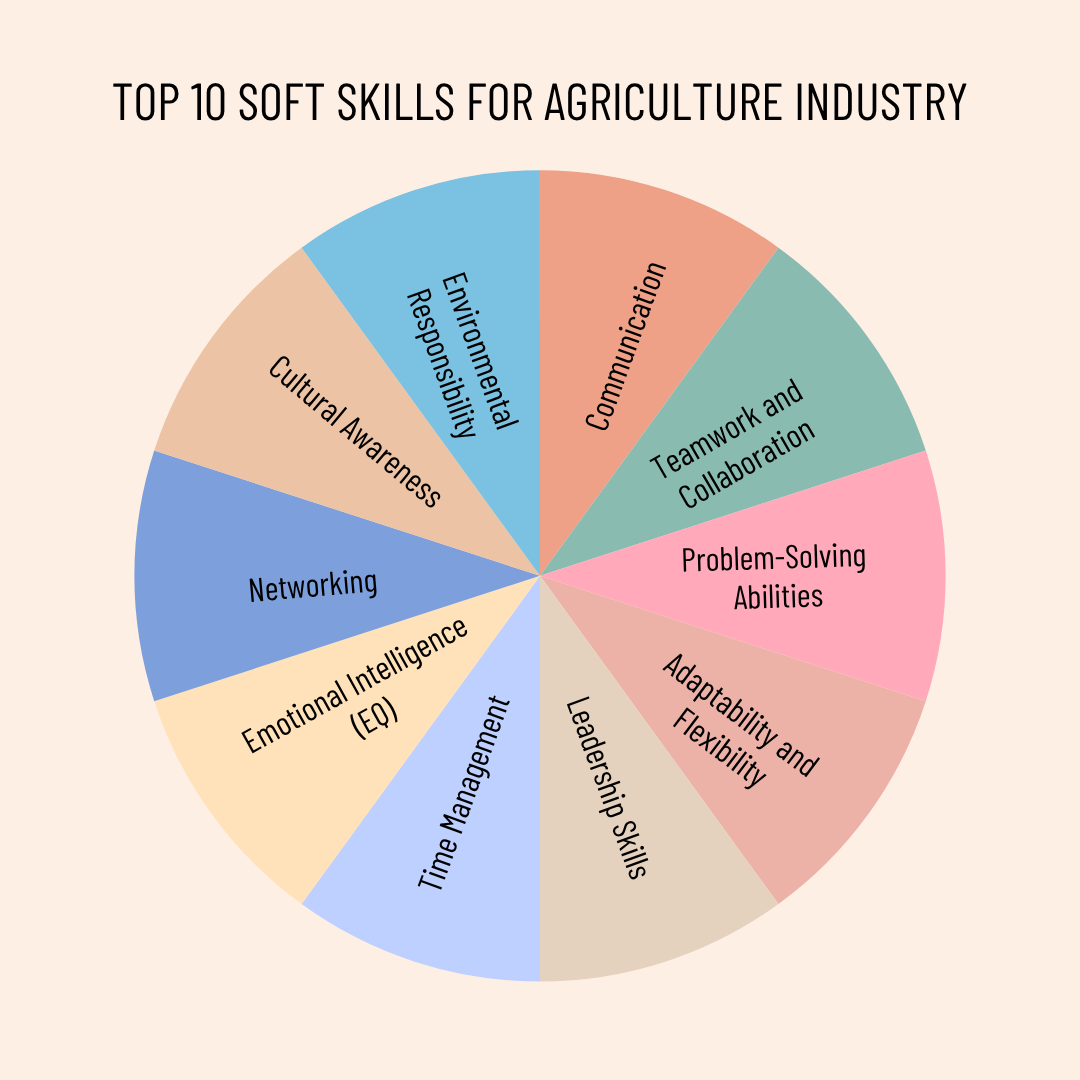
1. Communication skills
Strong communication is the heart of every successful career. In the agricultural industry, whether you are coordinating in a team, presenting research findings to stakeholders, or educating farmers about new technologies, in all these, your ability to express your thoughts and ideas confidently is essential. Whether you are presenting data or discussing crop issues, being able to convey your message effectively is key.
You require communication for writing clear and concise field reports, presenting agricultural data to government bodies, collaborating with farmers from different regions, or negotiating with suppliers.
2. Teamwork and collaboration
Agriculture is not a solo effort. From field operations to laboratory research and managing logistics team work plays a vital role. Succeeding in this environment requires the ability to work effectively with people from diverse roles and backgrounds. Teamwork in the agriculture industry typically includes collaborating with scientists on crop improvement projects, working with food safety experts, and partnering with NGOs for community-based agriculture development. Every successful venture is the result of strong collaboration.
3. Problem-solving ability
Uncertainty is a part of this industry with unpredictable weather conditions, market fluctuations, pest outbreaks, and more. The ability to analyze the situation and come up with a solution is essential. Problem solving in this industry is not just limited to fixing things when they go wrong, but it is also about identifying inefficiencies in the farm management, anticipating potential risks, applying scientific research to solve on-ground issues, and many more.
4. Adaptability and flexibility
The agriculture industry has to go through so much uncertainty and dynamic factors like consumer preference, climate change, and government regulations, so this industry requires professionals who are flexible enough to adapt to new tools, methods, and practices. Adaptability in this sector means switching to climate-resilient crop varieties during unpredictable weather, learning and adapting to new and required technologies, and switching to climate-resilient crop varieties during unpredictable weather.
5. Leadership skills
Leadership skills are a must-have skill in every industry, whether you are leading a research project, working in agri marketing, or managing a farm, leadership is a vital skill Strong leadership can set you apart from others. In this industry, leadership includes guiding a team of field workers, inspiring innovation in farming techniques, and making critical decisions under pressure.
6. Time management
Generally, agriculture follows seasonal cycles and strict deadlines, whether it's planting, harvesting, or processing. Managing time efficiently can make the difference between profit and loss. Time is considered one of the most valuable resources in the food and agriculture industry. Time management matters for many reasons, like in agriculture, delays do not cause inconvenience, but they can result in crop loss, loss of market opportunity, and financial damage
7. Emotional intelligence
Working in the agricultural industry can be stressful at times due to situations such as crop failure and supply chain issues. Emotional intelligence helps professionals handle stress, empathize with others, and maintain positive workplace relationships. Technical expertise alone is not enough in an industry as dynamic and people-centric as agriculture. In agriculture, where challenges often impact people’s livelihoods directly, being emotionally intelligent is a sign of true leadership and professionalism.
8. Networking
Agriculture is a completely community-driven industry. Your knowledge and expertise are important, but your networking is also equally important. Building meaningful relationships that can support your growth, open up new opportunities, and help you stay informed in a rapidly evolving sector. Networking helps you stay updated on the latest industry trends, policies, and technologies, discovering job opportunities and gaining access to mentors, funding, and expert guidance.
9. Cultural awareness
Agriculture knows no boundaries; it is practiced across diverse geographies and communities. Understanding cultural differences and being sensitive to local traditions can enhance your work in rural areas and international projects. Understanding and respecting cultural differences is crucial; it is a soft skill that helps you communicate, collaborate, and create impact across different social and cultural settings.
10. Environmental responsibility
With growing awareness around sustainability, ethics in agriculture have become more important than ever. Professionals are expected to act responsibly while using resources, managing waste, and treating labor fairly. This skill is important for reasons that include ensuring long-term soil and crop health by promoting sustainable farming practices, and supporting fair labor practices in farming communities.
Final thought
Now the agriculture sector is more than just farming; it's about leadership, collaboration, innovation, and critical thinking. You can position yourself as a ready professional in this field by developing these 10 soft skills, which help you in tackling challenges of modern agriculture.