

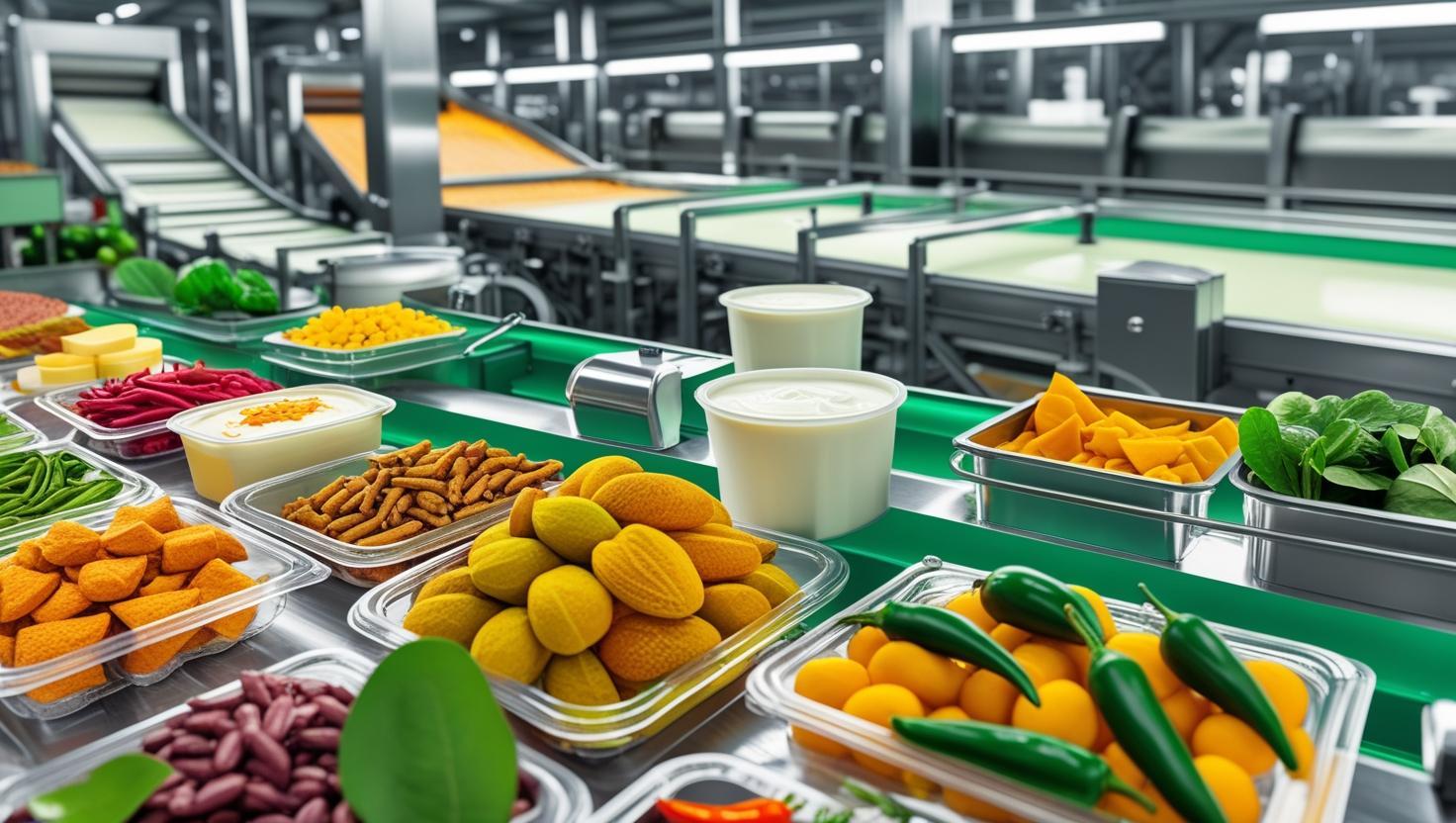
Introduction to the Food Processing Industry
The food processing industry in India holds immense promise as a growth sector, owing to its capacity to supply quality, nutritious, and hygienic food products while providing better income to farmers. This industry is structured into organized and unorganized sectors, yet faces challenges due to nascent processing levels and supply chain gaps. The industry has evolved significantly but is still maturing compared to other countries with higher levels of processing. This article delves into its significance, growth potential, challenges, and key government policies driving its development.
Significance of the Industry
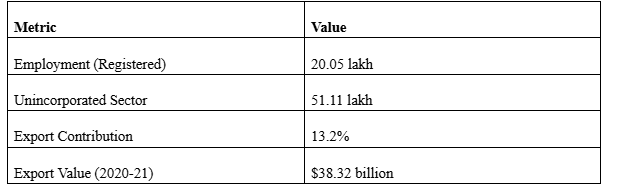
• Economic Role: Accounts for 32% of India’s food market, ranking fifth globally in production, consumption, and expected growth.
• Employment: Engages over 71.16 lakh people, spanning organized and unincorporated sectors, making it a vital employment driver.
• Exports: The industry’s export share stands at 13.2% of total exports, reaching major markets like the Middle East, Europe, and North America.
Table 1: Key Metrics of the Food Processing Industry
Growth and Potential
India’s food processing industry has witnessed steady growth, especially in packaged foods, dairy, and meat segments. This growth is propelled by shifts in consumer preferences, increasing demand for convenient foods, and enhanced investment in the sector. With a favorable geographic position, India can expand exports to food-importing regions, enhancing its role in global food trade. Some notable drivers include:
• Market Demand: The demand for ready-to-eat and home-deliverable foods is on the rise, driven by urbanization and lifestyle shifts.
• Exports: India's strategic location enhances its export potential to regions such as the Middle East, Southeast Asia, and Europe.
• Investment: The sector has attracted $9.98 billion in FDI, with international players like Nestlé, Coca-Cola, and Kellogg's investing in India.
• Regional Development: Increased investment has also led to the establishment of Mega Food Parks across the country to promote regional industry clusters.
Challenges Facing the Industry
The food processing industry faces several challenges that hinder its expansion and limit its productivity:
• Farm-Level Issues: Low crop yields, reliance on traditional farming practices, and unreliable storage solutions contribute to lower productivity. Additionally, farmers face unpredictable weather patterns, making supply inconsistent.
• Infrastructure Gaps: Inadequate cold storage, poor distribution infrastructure, and lack of a streamlined supply chain add to food wastage and inefficiency.
• Financial Constraints: Limited financing options, high import duties, and other economic costs reduce competitive edge. This is particularly challenging for small and medium enterprises seeking to modernize operations.
• Consumer Awareness and Preferences: While demand for processed foods is growing, there's a lack of awareness on the quality and safety standards, sometimes leading consumers to shy away from packaged goods.
Government Policy and Initiatives
The Ministry of Food Processing Industries (MoFPI) has introduced several supportive policies that aim to strengthen the industry and promote sustainable growth:
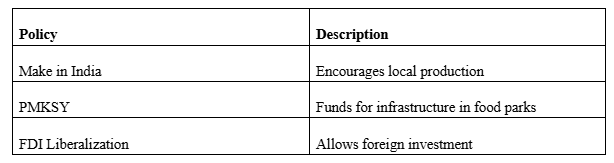
• Make in India Initiative: This initiative emphasizes domestic manufacturing of food products, aligning with the broader vision of Aatmanirbhar Bharat to promote self-reliance in the sector.
• Infrastructure Development: Pradhan Mantri Kisan Sampada Yojana (PMKSY) funds Mega Food Parks, which provide utilities such as roads, electricity, cold storage, and logistics facilities. These parks foster regional industrial clusters, making it easier for businesses to establish operations in 'plug-and-play' environments.
• FDI Liberalization: Policies now allow foreign investments, opening doors for global companies to partner with local businesses, bringing advanced technology and practices to the sector.
Table 2: Government Policies and Initiatives
Importance of Food Safety
The importance of food safety has grown post-pandemic, as consumers become more conscious of hygiene and quality in processed foods:
• Regulation: The Food Safety and Standards Authority of India (FSSAI) enforces stringent quality controls and mandates 'Nutritional Facts' labelling on processed foods.
• Training and Practices: Emphasis is placed on good manufacturing practices and hygiene standards, with industry and regulatory bodies collaborating to elevate standards.
• Consumer Awareness: Consumers are encouraged to make informed choices through initiatives promoting transparency in nutritional information.
Conclusion
India's food processing industry is poised for continued growth, supported by progressive policies, increasing consumer demand, and expanding investment. However, to fully harness its potential, challenges in infrastructure, financing, and technological adoption must be addressed. Focusing on innovation, enhancing rural supply chains, and building consumer trust in food safety are essential steps.