

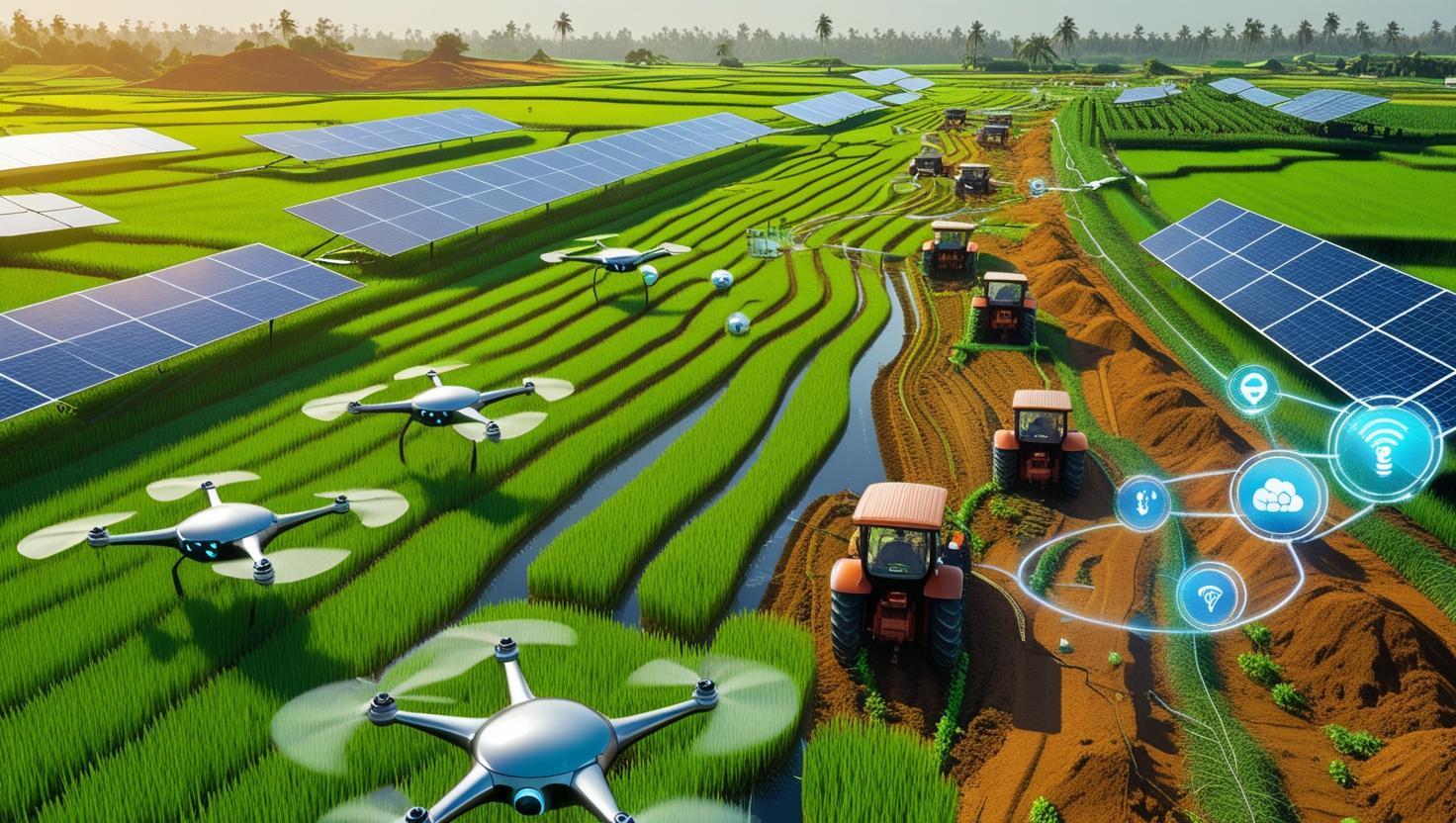
Agriculture is a cornerstone of the Indian economy, employing approximately 45% of the country’s workforce and contributing around 17.5% of GDP. Despite this, the sector faces multiple challenges, including limited technological adoption, fragmented land holdings, and inadequate infrastructure. Agritech startups in India are working to address these issues and modernize Indian agriculture. This blog explores the revolutionary growth, challenges, and potential of agritech startups in India, paving the way for a new generation of “agripreneurs.”
The Need for Agritech in Indian Agriculture
Indian agriculture, though substantial, remains underdeveloped in terms of technological integration. Factors that inhibit the potential of Indian agriculture include:
- Small farm holdings: Average land holdings reduced from 2.3 ha in 1970 to ~0.87 ha in 2017.
- Low penetration of Farmer Producer Organizations (FPOs): Limited knowledge and skill prevent FPOs from sustaining long-term.
- Lack of agricultural data: Limited access to reliable data on demand, supply, and weather predictions.
- Insufficient credit access: Most small farmers rely on high-interest loans from informal lenders.
- Low price realization: Indian farmers typically receive only 8-10% of the final consumer price.
Rise of Agritech Startups
The rise of Agri-tech startups in India aims to overcome these challenges by integrating modern technology at every stage of the agricultural value chain. Major solutions provided by these startups include:
- Supply Chain Optimization: Technologies like Big Data, Internet of Things (IoT), and digital platforms help streamline the supply chain.
- Farming-as-a-Service (FaaS): This model enables farmers to rent equipment and access other resources on a pay-per-use basis.
- Precision Agriculture: Helps improve yield and crop health monitoring, using data-driven solutions for better decision-making.
Growth Statistics
- Approximately 1,000 agritech startups are currently operating, contributing around $313 million in value and showing a 29% year-over-year growth.
- The agritech revenue potential is expected to reach $24 billion by 2025.
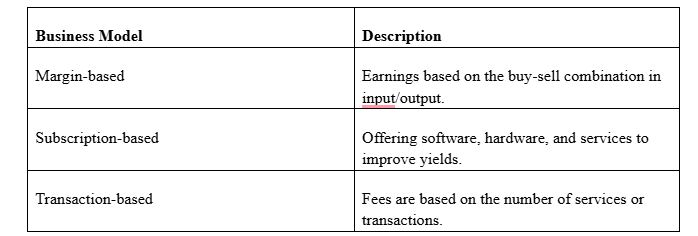
Agritech Business Models
The business models of agritech startups in India are categorized as follows:
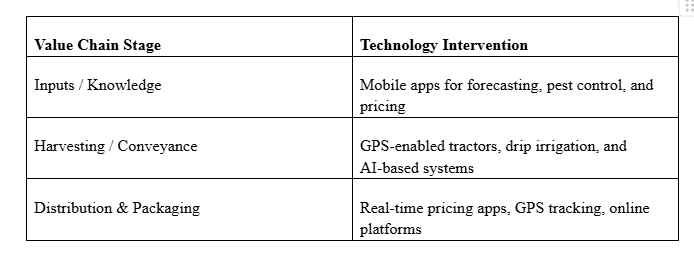
Key Focus Areas of Agritech Startups
The key areas that require technology interventions are illustrated below:
Challenges Faced by Agritech Startups
While agritech startups hold significant potential, they face certain challenges that hinder scalability and impact:
- Investor Reluctance: The sector's uncertainty leads to limited investor confidence.
- Rigid Traditional Models: Difficulty in overcoming conventional practices.
- Rural Connectivity: Weak internet connectivity in remote areas.
- Lack of Mentorship: Limited access to subject matter experts and commercial guidance.
- Funding Gaps: Agritech often lacks the capital it needs compared to other tech sectors.
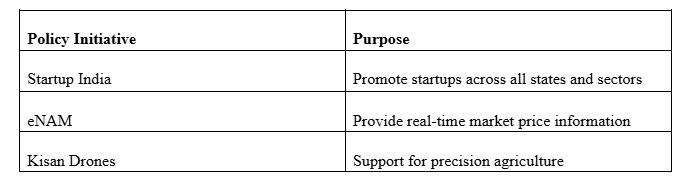
Support from the Indian Government
The Indian government has taken steps to support agritech, which include:
Success Stories and Major Players
The agritech sector in India has witnessed numerous success stories, proving that startups can significantly impact the sector’s efficiency and profitability.
- Ninjacart: Revolutionizing farm-to-consumer supply chains with reduced waste and increased farmer earnings.
- Dehaat: Offers a comprehensive platform for farmers, including supply chain solutions and advisory services.
- AgroStar and BigHaat: Major players in farm inputs and digital agri-marketplace solutions.
Conclusion and Future Prospects
Agritech startups have demonstrated the potential to uplift Indian agriculture by improving productivity, profitability, and sustainability. Despite challenges, the sector is expected to grow with continued government support, technological advancements, and innovative business models. Agritech startups have the potential to make agriculture a profitable and attractive profession for India’s youth, ushering in a new era of agripreneurs.