


The Pradhan Mantri Kisan Samman Nidhi (PM-KISAN) is a flagship welfare program by the Government of India, designed to provide direct financial support to farmers. This Central Sector Scheme, implemented by the Ministry of Agriculture and Farmers’ Welfare, plays a vital role in enhancing agricultural productivity and addressing the economic needs of farming households.
Key Features of PM-KISAN
• Objective: Provide income support to farming households to meet agricultural and domestic expenses.
• Direct Benefit Transfer (DBT): Annual financial assistance of ₹6,000 is credited directly into farmers’ bank accounts in three equal installments of ₹2,000 each.
• Eligibility: Initially limited to small and marginal farmers with up to two hectares of land, later expanded to include all farmers, irrespective of land size.
• Coverage: Over 11 crore beneficiaries have been included under the scheme.
Implementation and Benefits
1. Income Support
Ensures farmers can procure agricultural inputs like seeds, fertilizers, and equipment. Aims to reduce dependence on moneylenders.
2. Nationwide Impact
Uttar Pradesh leads in the number of beneficiaries, followed by Maharashtra, Madhya Pradesh, and Bihar. West Bengal initially opted out of the scheme, leaving many farmers excluded.
3. Regional Distribution
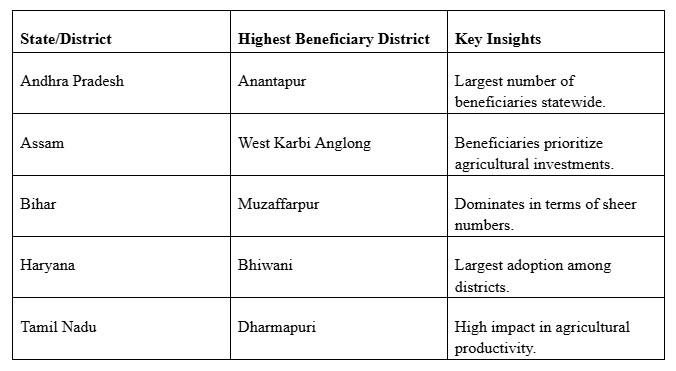
Utilization of Funds
Primary Uses
• Purchase of seeds (38.33%), fertilizers (15%), and pesticides (11.67%).
• Meeting household consumption and health care needs.
• Investments in education and farm mechanization.
Seasonal Trends
Beneficiaries allocate funds differently during peak agricultural and off-season periods.
Impact Assessment
1. Economic Benefits
• Improved crop productivity and resource efficiency.
• Shift toward high-value crops and diversified farming practices.
2. Social Empowerment
• Reduced financial dependency.
• Enhanced capacity for long-term planning and investments.
3. Challenges
• Limited awareness among farmers, especially in remote areas.
• Delayed fund transfers in certain regions.
• Need for periodic updates in beneficiary databases.
Suggestions for Improvement
• Capacity Building: Skill development programs for farmers to optimize fund usage.
• Infrastructure Development: Establish efficient mechanisms for fund disbursement and grievance redressal.
• Regional Focus: Tailored solutions for underperforming regions to enhance coverage.
Conclusion
The PM-KISAN scheme is a game-changer in the agricultural landscape of India. By providing timely financial support, it empowers farmers to adopt sustainable practices and secure their livelihoods. With continued refinement and implementation, this program has the potential to bridge socio-economic gaps and strengthen the foundation of Indian agriculture.