

In today's fast-evolving world, the agriculture and food industry is no longer limited to just traditional practices. The agriculture industry has come a long way just than growing crops, now it has become one of the most technologically advanced and skill-demanding sectors. Innovation, technology, and modern-day challenges have transformed how this sector operates. If you are a student planning to make your career in this sector, then you should know that only theoretical knowledge is not enough to succeed in this industry.
Technical skills are the only thing that sets you apart in this crowd, and they also bridge the gap between knowledge and real-world application. So, here are the top 10 essential skills every aspiring agri-food professional should focus on mastering.
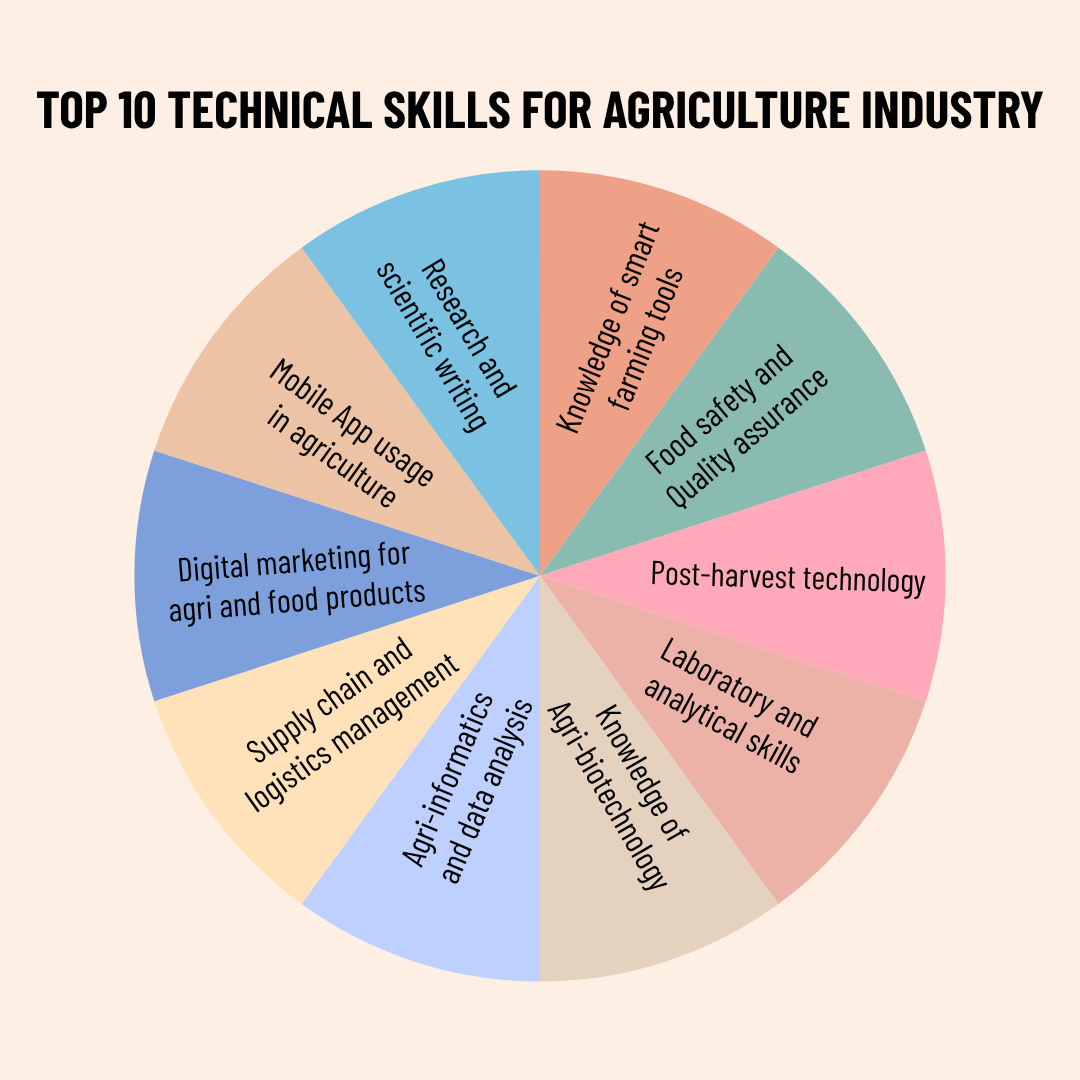
1. Knowledge of smart farming tools
Knowledge of the right technical tools is essential; you might have heard terms like GPS-based farming, drones, and soil sensors. These are precision agriculture. It’s a modern farming approach that uses technology to monitor and manage crops with more accuracy and efficiency.
EXAMPLE- Drones for crop mapping, IoT-based sensors, satellite imagery, etc.
Why is it important
These tools help farmers reduce chemical use, save water, and increase crop yield. Understanding how to operate and interpret data from these tools can make you stand out in the industry.
2. Food safety and Quality assurance
Food safety and quality assurance are related to the food processing side of the industry, so if you are interested in the food processing side of the industry, then this is a skill you must have. Food safety is not only limited to cleanliness, but it's about understanding the entire chain and how food is processed, packaged, transported, and stored.
Why is it important
Companies follow strict standards like HACCP, FSSAI, and ISO 22000 to ensure food safety, so if you want to work in agriculture and the food industry, then knowing these standards and how to apply them can help you land roles in quality control, food testing labs, and processing units.
3. Post-harvest technology
According to the indian grain storage management and Research Institute in India, annual storage losses have been estimated at 14 million tonnes worth of Rs. 7,000 crore due to poor storage and handling. That’s where post-harvest technology comes in. It includes techniques to process, store, and preserve food after it is harvested. You just need to learn about cold chain logistics, dehydration, vacuum packaging, and food preservation methods.
Why is it important
It is important because it adds value to raw produce and reduces food loss both economically and environmentally important.
4. Laboratory and analytical skills
Agriculture and food technology involve a lot of testing, from checking the nutrient content of soil to analyzing the quality of food products. The knowledge of how to handle lab equipment, perform chemical analysis, and follow lab protocols is extremely valuable. If you want to gain an extra advantage, then you should start practicing basic titration, PH measurement, or sample handling techniques during your coursework or internships.
Why is it important
Strong lab skills will help you ace roles like research and development, fertilizer production, or government testing labs.
5. Knowledge of Agri-biotechnology
From developing pest-resistant crops to creating high-yield seeds, biotechnology is changing how agriculture works. You don’t need to be a scientist, but understanding the basics of tissue culture, GM crops, biofertilizers, and biospesticides is helpful.
Why is it important
The knowledge of agri-biotechnology will open up careers in agri-research, seed companies, or biotech firms.
6. Agri-informatics and data analysis
With evolving technology, even agriculture is going digital. With so much data being collected from the field, market trends and weather, someone needs to make sense of it all. Start small and learn how to clean and visualize data. You don’t need to be a coder to begin.
Why is it important
If you can understand and analyze data using Excel, SPSS, or any other tool, then you can make informed decisions easily.
7. Supply chain and logistics management
There is a long chain from farm to warehouse to supermarket shelves. Food doesn’t magically appear in stores. Understanding how this agri-food supply chain works and how to manage it efficiently is a very marketable skill.
Why is it important
Logistics and inventory management a growing field within the food industry, and it’s becoming more tech-driven with ERP systems and real-time tracking tools.
8. Digital marketing for agri and food products
It might be surprising for you, but digital marketing plays a huge role in agriculture, especially for startups or food brands promoting organic, processed, or local products.
Why is it important
Learning the basics of SEO, social media, content creation, and product branding can help you work in agri-tech companies, food startups, or even start your own venture.
9. Mobile App usage in agriculture
In this era of digitalization, everyone uses a mobile phone, and our farmers are also using mobile apps for everything from weather updates to crop advice. Understanding how these apps work or how to create digital solutions for farmers is an in-demand skill.
Why is it important
The app helps bridge the gap between agri-tech companies. If you can help translate tech into usable solutions, you become a valuable asset.
10. Research and scientific writing
Whether you plan to pursue higher studies or join the corporate world, the ability to write research papers, reports, and project proposals is very useful. Start writing summaries of your practicals or internships. Use tools like Grammarly to improve your structure and referencing.
Why is it important
Strong communication, especially written, is key to getting scholarships, publishing work, or presenting ideas.
Final thought
The agriculture and food industry is no longer just about traditional practices; now it is a dynamic and evolving space that blends science, sustainability, and technology. As a student, you hold the power to shape your future. But for doing that, you need more than just a degree or classroom knowledge. You need skills that speak and language of the industry and skills that make you confident, capable, and career-ready.