

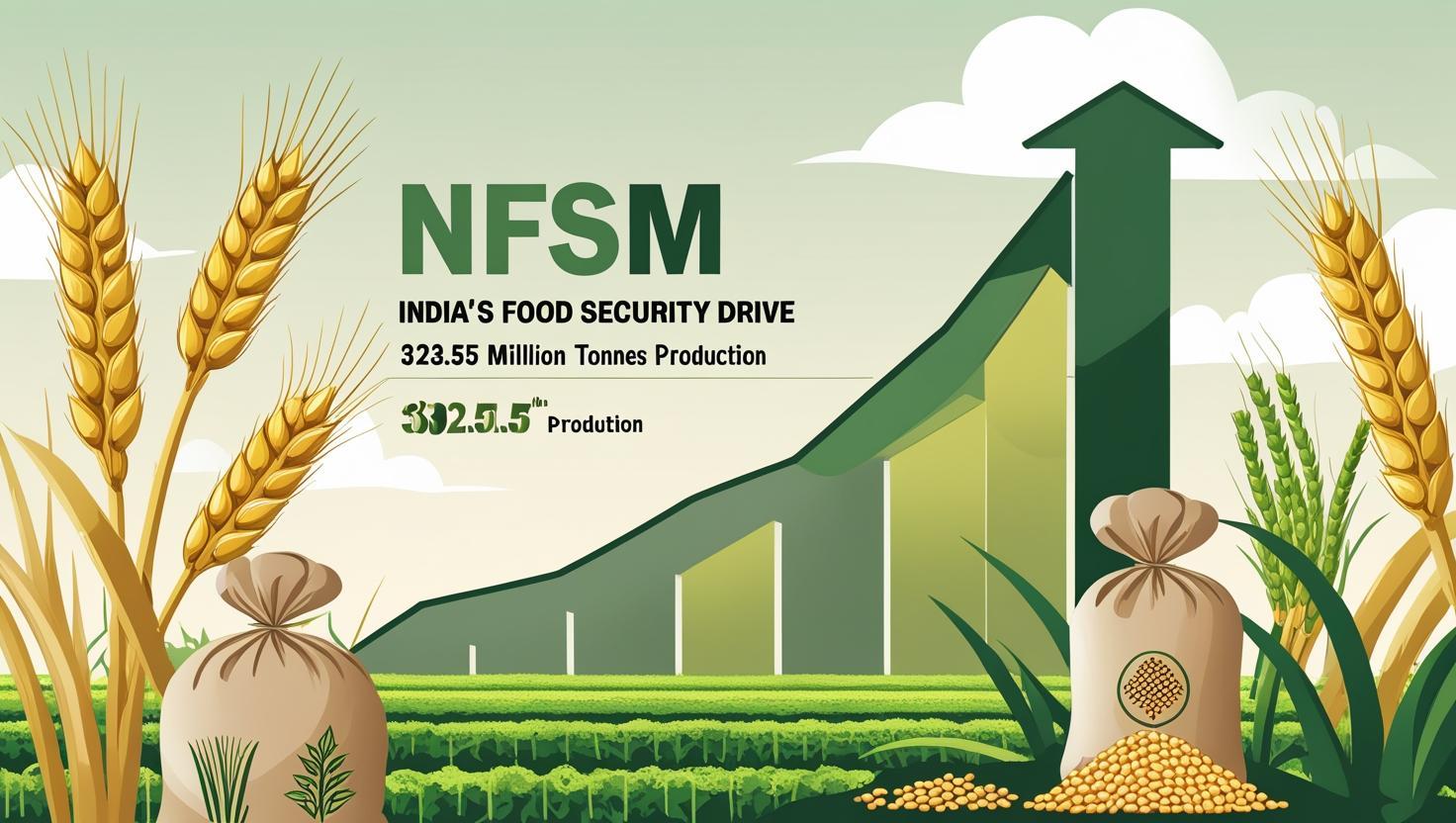
The National Food Security Mission (NFSM) was launched in 2007-08 to ensure sustainable growth in food grain production by addressing productivity challenges. It aims to ensure food security for India’s growing population and reduce dependency on imports.
Objectives of NFSM
The NFSM is designed with the following objectives:
- Increase Food Grain Production: Enhance the production of rice, wheat, pulses, coarse cereals, and nutri-cereals.
- Restore Soil Fertility: Encourage sustainable farming practices to rejuvenate soil health.
- Create Employment: Generate rural employment opportunities through agricultural activities.
- Enhance Farmer Incomes: Promote the use of high-yielding varieties (HYVs) and modern farming tools for higher productivity.
Key Components of NFSM
- Cluster Demonstrations: Large-scale demonstrations of improved agricultural practices.
- Seed Distribution: Providing certified seeds of HYVs and hybrids.
- Resource Conservation: Tools for efficient water use and nutrient management.
- Farmer Training: Educating farmers on better farming techniques.
- Inclusion of Millets: Promoting millets (Shree Anna) for nutritional security and increased demand in domestic and global markets.
Achievements from 2020 to 2024
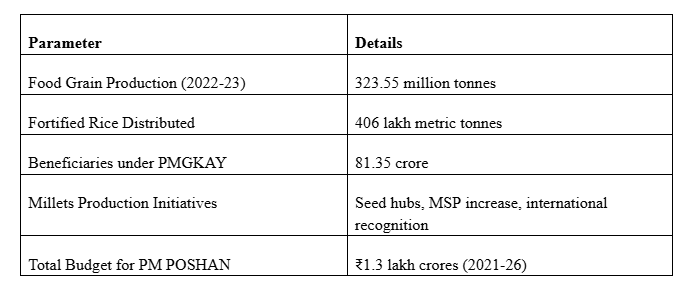
- Enhanced Food Grain Production: Food grain production rose to 323.55 million tonnes in 2022-23, a significant increase compared to previous years.
- International Year of Millets (2023): Recognized by the UN, India celebrated 2023 as the International Year of Millets, promoting its nutritional benefits and increasing global awareness.
- Rice Fortification: Over 406 lakh metric tonnes of fortified rice distributed under the Public Distribution System (PDS) from 2019-20 to 2024.
- Support for Farmers: The Government fixed Minimum Support Prices (MSP) for major crops, including millets, ensuring fair prices for farmers.
- Infrastructure Development: Establishment of millet seed hubs and productivity-linked incentives for processing millet-based products.
Recent Policy Highlights
- PM POSHAN Scheme (2021-26): With a budget of ₹1.3 lakh crores, this program ensures nutritional meals for school children.
- Pradhan Mantri Garib Kalyan Anna Yojana (PMGKAY): Extended until 2024 to provide free food grains to 81.35 crore beneficiaries, covering rural and urban poor.
- Nutritional Security for Women and Children: Special provisions for free meals through anganwadis and mid-day meal schemes for children aged 6 months to 14 years.
Impact of NFSM
The mission has transformed India into a food surplus country, making it:
- The largest producer of pulses and milk.
- The second-largest producer of rice, wheat, and coarse cereals globally.
Conclusion:
The National Food Security Mission (NFSM) has played a transformative role in boosting food grain production and promoting sustainable agricultural practices in India. By addressing critical challenges such as productivity enhancement, soil health restoration, and farmer welfare, the mission contributes significantly to achieving the nation's food security goals. While NFSM focuses on production, its impact is amplified when aligned with broader programs like the National Food Security Act (NFSA), ensuring both availability and accessibility of nutritious food. With continued innovation and support, NFSM is poised to strengthen India's position as a global agricultural leader while uplifting rural livelihoods.