

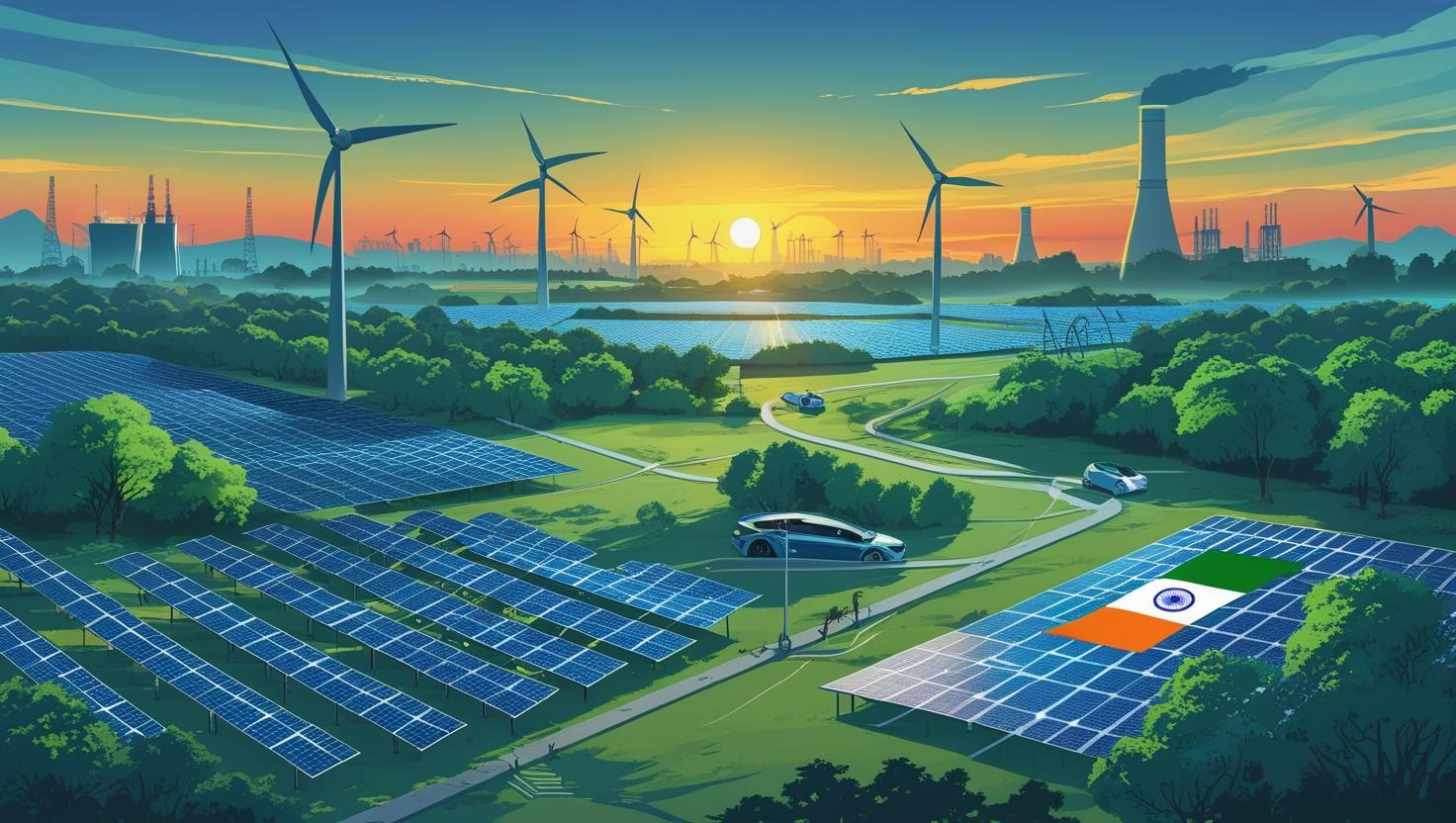
Introduction: India’s Net Zero Vision
India's commitment to net zero by 2070, announced at COP26, marked a pivotal point in the country’s climate policy. However, it raises questions about the scale of decarbonization and the impact on sectors like energy, industry, and agriculture. India’s journey to net zero involves achieving a peak in emissions by 2040–45, reducing GHGs across various sectors, and focusing heavily on solar and nuclear energy to power its future. The policy response includes Nationally Determined Contributions (NDCs) and a Long-Term Low Emissions Development Strategy (LTS), forming the cornerstone of India’s emissions reduction.
National and Subnational Perspectives
- Climate Equity: Equity lies at the core of India’s climate debate. With only 320 GtCO₂ left for the world to stay under the 1.5°C target, India faces challenges in balancing economic growth with emission reductions. An equitable carbon budget is essential, ensuring fair access to resources across the country's regions and income groups.
- Macroeconomic TradeOffs: India’s economic growth is closely tied to its fossil fuel usage. As the country shifts to renewable energy, there are concerns about potential economic impacts, such as job losses in fossildependent sectors and reduced GDP. However, net zero offers opportunities through reduced oil imports and job creation in renewable sectors.
- Just Energy Transition: A “just transition” ensures that the move to renewable energy doesn’t disproportionately impact vulnerable communities. India aims to address these concerns through state-level transition plans, which focus on reskilling workers, especially in coal-dependent states, and providing social support to those affected.
Sectoral and Technological Transitions
- Energy Sector Transformation: The energy sector, responsible for 75% of India’s emissions, is crucial for achieving net zero. Shifting from coal to renewable sources like solar and wind is essential. Yet, this transition comes with hurdles, such as the need for critical minerals, which India currently imports, and advancements in storage technology to handle variable renewable energy (VRE).
- Critical Minerals and Dematerialization: The shift towards renewable energy requires a reliable supply of critical minerals like lithium and cobalt. India needs to secure these materials through strategic partnerships and invest in recycling technologies.
- Carbon Dioxide Removal (CDR): Although at an early stage, CDR technologies will be essential for meeting long-term emissions goals. Strategies include reforestation, soil carbon enhancement, and capturing emissions from industrial sources.
Enablers of the Transition
- Climate Institutions: Strong institutions are vital for monitoring and enforcing climate policies. India’s climate institutions need to be empowered to manage large-scale transformations, providing regulatory and financial support.
- Climate Finance: Achieving net zero will require substantial investment, and India’s financial structure will need significant reforms to attract domestic and international funding. Carbon markets present a promising solution, allowing India to capitalize on carbon credits while minimizing mitigation costs.
- Lifestyle Changes (LiFE Initiative): India’s “Lifestyles for Environment” (LiFE) campaign promotes sustainable living, urging communities to adopt eco-friendly practices. This shift in lifestyle and consumption is a key aspect of achieving long-term climate goals.
Challenges and the Way Forward
Data and Technology Gaps: India's climate strategy requires improved data for better decision-making. Enhanced data collection on emissions and energy use, as well as stronger digital tools, are necessary for monitoring and assessing climate progress.
Policy Coordination and Governance: Effective governance across federal and state levels is essential for achieving net zero. This includes alignment of state policies with national targets, building capacity at the local level, and implementing strategies tailored to regional needs.
Finance and Market-Based Solutions: Climate finance is a major hurdle. To address funding gaps, India is exploring international funding options and carbon markets. Blended finance models, leveraging both public and private investments, will play a significant role in supporting the transition.
Conclusion
India's pathway to net zero by 2070 is both ambitious and necessary. This transition, while challenging, presents opportunities for economic transformation, job creation, and a healthier environment. The journey involves navigating tradeoffs, enhancing state-level capacity, and leveraging global partnerships. As India moves forward, it will be critical to ensure that climate actions are inclusive, equitable, and sustainable, setting a global example for emerging economies.