


Carbon credits have become an essential tool in the fight against climate change. They enable individuals and organizations to offset their greenhouse gas (GHG) emissions by investing in projects that reduce or avoid emissions in other parts of the world. In this blog, we’ll explore what carbon credits are, how they are calculated, and the factors that influence their pricing. This guide is especially helpful for students who want to understand the essentials of carbon credits and their significance in today’s world.
What is a Carbon Credit?
A carbon credit is a tradable unit that represents a reduction or avoidance of one metric tonne of GHG emissions. These credits are part of the voluntary carbon market (VCM) and can be purchased by individuals or companies looking to offset their emissions. However, carbon credit prices can vary due to market dynamics, project costs, and locations, since the market is unregulated.
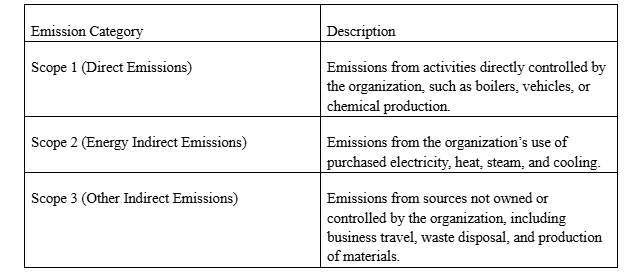
Categories of GHG Emissions
Steps to Calculate Carbon Credits
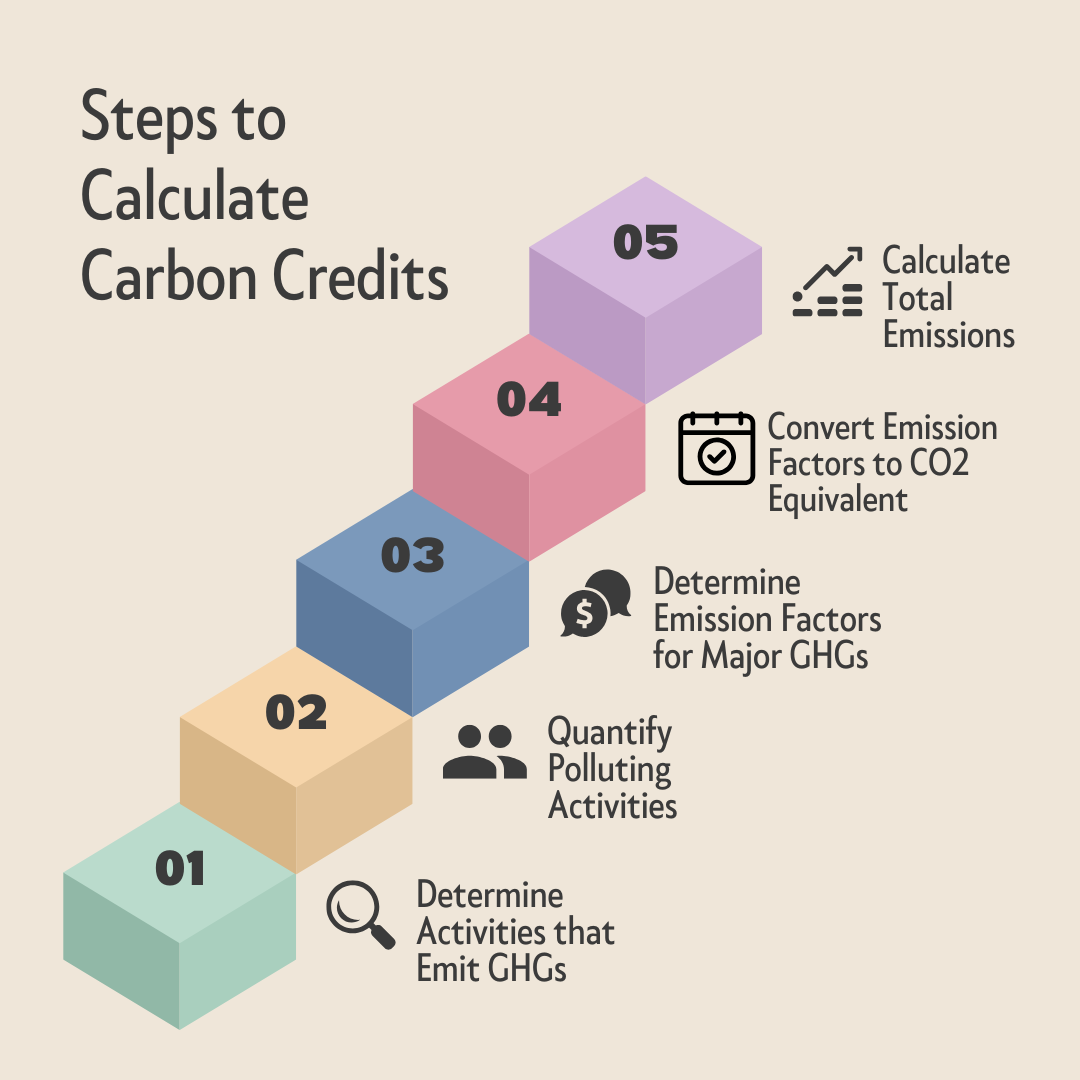
Step 1: Determine Activities that Emit GHGs
Identify all activities that produce GHG emissions within your organization. These activities fall under Scope 1, Scope 2, and Scope 3 emissions, as described in the table above. This step is critical for a comprehensive carbon accounting process.
Step 2: Quantify Polluting Activities
To calculate GHG emissions, use emission factors in conjunction with activity data from the organization. This data can include resource usage details like receipts or invoices. For example, fuel usage can be measured in volume, while electricity can be quantified in kilowatt-hours.
Step 3: Determine Emission Factors for Major GHGs
Each activity or fuel type has specific emission factors (EFs) for calculating GHG emissions. The formula is:
Activity Data x Emission Factor = GHG Emission
For instance, total electricity consumed in a year can be multiplied by its EF to estimate total emissions.
Step 4: Convert Emission Factors to CO2 Equivalent
The emission factors need to be converted to a common unit, often CO2 equivalent (CO2e), for consistent reporting. This allows for the aggregation of emissions from various GHGs into a single metric.
Step 5: Calculate Total Emissions
Finally, sum up all emissions, now expressed in CO2e, for a full accounting of the organization’s emissions for the year. This final figure can be used to assess the carbon credits required to offset the emissions.
Assessing Carbon Credit Quality
When purchasing carbon credits, it’s important to consider the following factors to ensure their effectiveness:
- Additionality: Ensures that the carbon reduction wouldn’t have occurred without the credit.
- Permanence: Measures how long the carbon reductions last, with higher quality credits offering long-term reduction.
- Measurability: Evaluates the accuracy of emission data to prevent overestimations.
Pricing of Carbon Credits
The cost of carbon credits varies based on the type and location of projects that generate them. For example:
- Wind projects in India: Priced around $1.20 per tonne due to their abundance.
- Wind projects in the US: Priced approximately $3.70 per tonne, reflecting scarcity in the region.
Conclusion
Calculating carbon credits requires a thorough understanding of emission sources, accurate measurement of polluting activities, and careful selection of emission factors. Assessing credits for additionality, permanence, and measurability is crucial for ensuring their effectiveness. With carbon credits, organizations can make a meaningful impact on reducing global emissions, moving us closer to a sustainable future.