

Agriculture is the backbone of India's economy, and ensuring its sustainability is crucial for food security and economic growth. With around 60% of India's net sown area being rainfed, promoting sustainable agricultural practices has become a necessity. The National Mission for Sustainable Agriculture (NMSA) addresses these challenges by focusing on natural resource conservation, climate resilience, and integrated farming.
Key Highlights of NMSA
Objectives \t
- Enhance Productivity and Sustainability: By promoting location-specific integrated farming systems.
- Conserve Natural Resources: Using soil and moisture conservation measures.
- Improve Soil Health: By adopting soil test-based nutrient management and sustainable practices.
- Optimize Water Usage: Through efficient water management for 'more crop per drop.'
- Develop Farmer Capacity: By collaborating with missions like the National Food Security Mission and NICRA.
- Pilot Rainfed Farming Models: Testing innovative approaches in selected areas.
- Promote Coordination: Among departments to ensure seamless implementation.
Strategies for Success
To meet its objectives, NMSA adopts a multi-pronged strategy:
1. Integrated Farming Systems: Combining crops, livestock, fisheries, and agroforestry for livelihood diversification.
2. Resource Conservation: Popularizing technologies for managing extreme climatic events.
3. Water Management: Promoting efficient water use with advanced technologies.
4. Improved Agronomy: Encouraging practices to enhance soil quality and productivity.
5. Data-Driven Decision Making: Using GIS-based soil maps for location-specific crop management.
6. Knowledge Integration: Partnering with research institutions like ICAR for adaptive solutions.
7. Cluster Development: Creating farming clusters to test and replicate successful models.
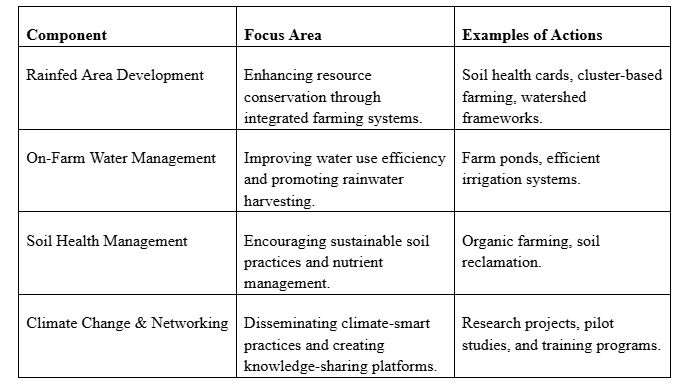
Major Components of NMSA
How Farmers Benefit
- Increased Resilience: Adoption of climate-smart practices reduces risks from natural disasters.
- Higher Productivity: Integrated farming ensures steady income streams.
- Improved Soil and Water Quality: Sustainable practices maintain long-term land health.
- Support and Training: Regular guidance from institutions and experts.
Unique Initiatives
- Watershed Plus Framework: Using existing natural resources from watershed projects for farming enhancements.
- Public-Private Partnerships: Collaborating with private entities for timely soil testing and service delivery.
- Knowledge Consortia: Integrating state universities, KVKs, and research bodies for cohesive knowledge sharing.
Visualizing NMSA’s Impact
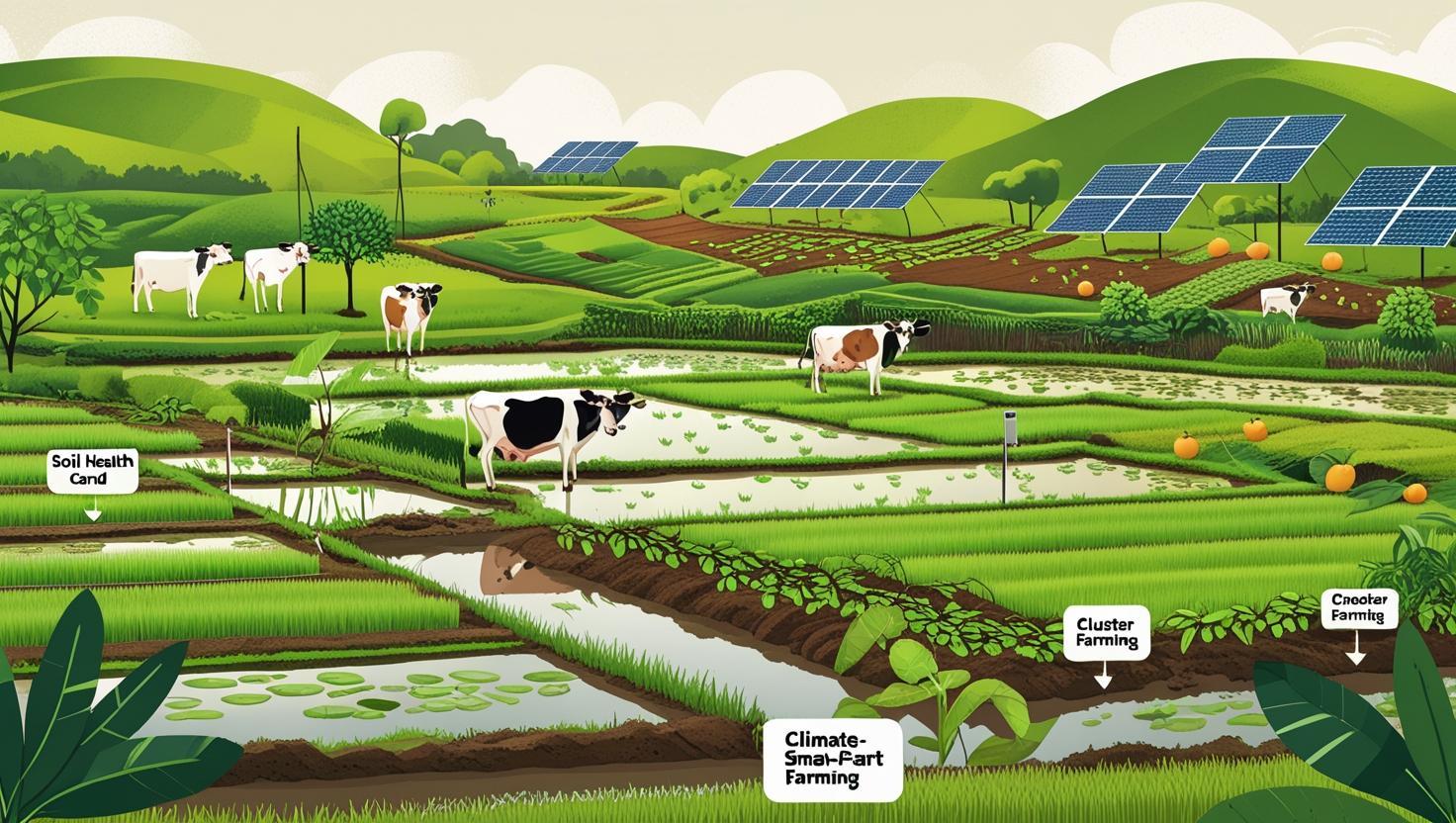
- Farmers in Rainfed Areas use soil health cards for informed decisions on fertilizers, improving yield while preserving resources.
- Cluster-Based Farming helps neighboring farmers unite resources, increasing productivity collectively.
- On-Farm Ponds allow farmers to conserve rainwater, ensuring availability during dry spells.
By emphasizing integrated farming, sustainable practices, and advanced technology adoption, the National Mission for Sustainable Agriculture (NMSA) represents India's commitment to creating a resilient agricultural system.