

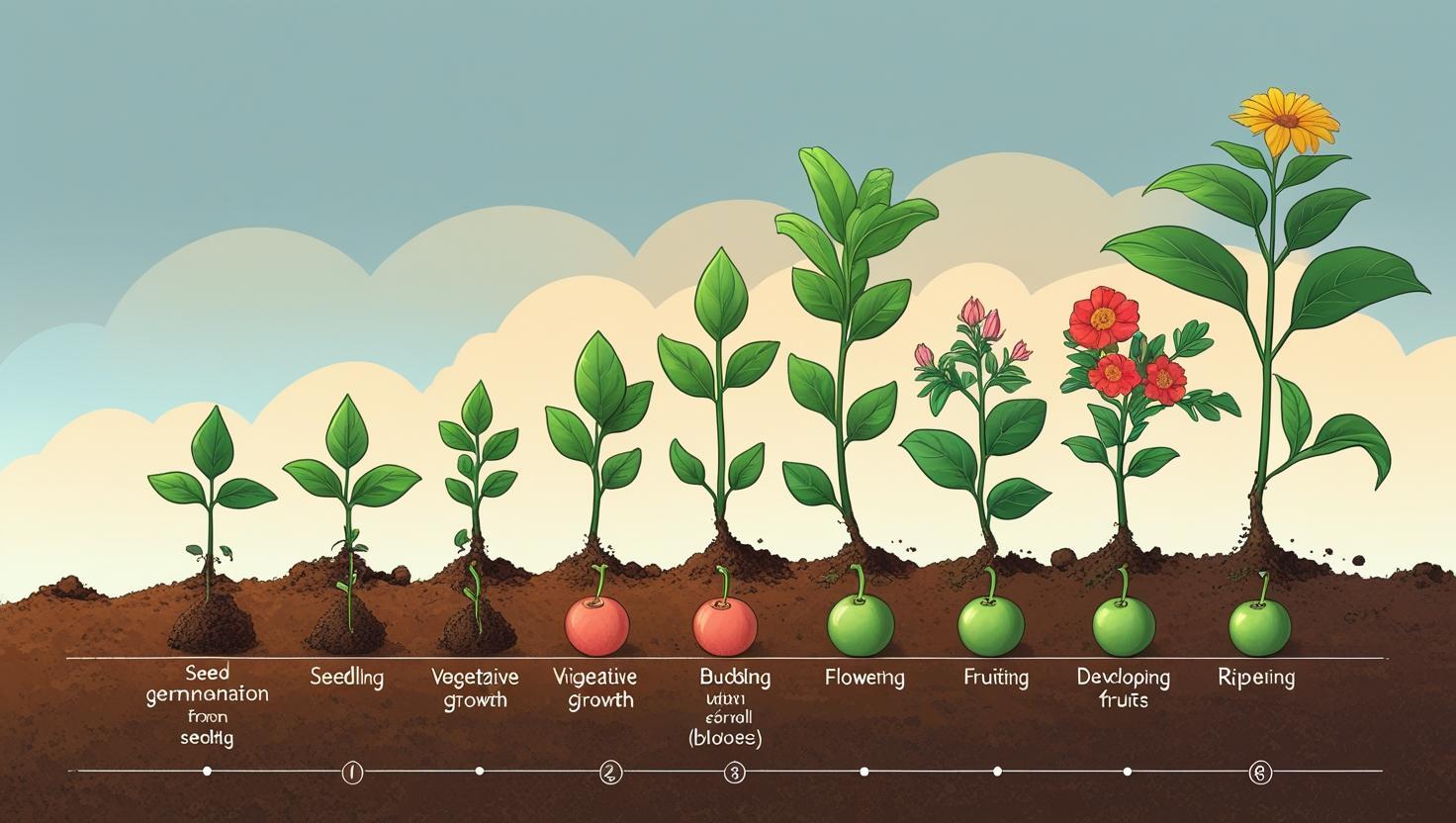
Understanding the different stages of plant growth is crucial for optimizing cultivation practices, managing inputs, and ensuring a healthy yield. Plants undergo distinct growth phases, each marked by specific physiological and structural changes. Below, we explore these stages in detail, providing insights into their significance and requirements.

1. Germination: The Starting Point
Germination begins when a seed absorbs water and activates its metabolic processes. During this stage:
- Key processes: The seed swells, the radicle (primary root) emerges, and the shoot system starts to develop.
- Conditions required: Adequate moisture, oxygen, and optimal temperatures.
- Significance: Establishing a strong seedling foundation is vital for subsequent growth stages.
For successful germination, seed treatment and proper sowing depths are recommended to ensure robust emergence.
2. Seedling Stage: Laying the Groundwork
This stage is characterized by rapid growth as the plant establishes its root system and develops its first true leaves.
- Key processes: Photosynthesis begins, and the plant starts producing its food. Roots anchor the plant and absorb water and nutrients.
- Challenges: Seedlings are highly vulnerable to pests, diseases, and environmental stress.
Early care, such as nutrient application and pest control, ensures strong development.
3. Vegetative Stage: Rapid Growth
During the vegetative phase, the plant focuses on developing its stems, leaves, and roots.
- Key processes: Accelerated photosynthesis supports energy storage. Root systems deepen, and leaf canopies expand.
- Care requirements:
- Adequate nitrogen supply promotes foliage growth.
- Regular pest and disease monitoring is essential.
- Irrigation ensures consistent water availability.
The vegetative phase is critical for setting the foundation for reproductive success.
4. Budding Stage: Preparing for Reproduction
Plants shift their energy focus from vegetative growth to reproduction, forming buds.
- Key processes: Development of flower buds or inflorescences.
- Nutritional needs: Phosphorus and potassium are vital to support this transition.
Proper nutrient management ensures the plant is ready for flowering.
5. Flowering Stage: The Reproductive Phase
Flowering marks the beginning of the reproductive phase, where pollination and fertilization occur.
- Key processes: Flowers bloom, and reproductive organs mature.
- Challenges: Environmental stress, such as temperature fluctuations or drought, can affect flower formation.
- Care recommendations:
- Pollinator-friendly practices enhance fertilization.
- Nutrient applications should focus on potassium for better flower and fruit quality.
Flowering is a delicate stage that requires careful management to maximize productivity.
6. Fruiting Stage: Formation of Produce
This stage involves the development of fruits or seeds.
- Key processes: Pollinated flowers transform into fruits or seeds, and these structures grow and mature.
- Care requirements:
- Water and nutrient supply must remain consistent.
- Protection against pests and diseases is crucial to prevent crop losses.
Efforts during this stage directly impact the quality and yield of the harvest.
7. Ripening and Harvesting
Ripening signals the end of the plant's lifecycle as fruits or seeds mature.
- Key processes: Fruits soften, change color, and accumulate sugars or oils.
- Harvesting: Proper timing is essential to ensure optimal quality and market value.
- Post-harvest care: Immediate processing or storage prevents losses and maintains produce quality.
Efficient management during ripening and harvesting maximizes the output and profitability of farming practices.
Conclusion
From germination to harvesting, each stage of plant growth plays a pivotal role in a plant’s lifecycle. By understanding these phases, students and growers alike can adopt targeted practices to support healthy plant development and achieve higher yields. Awareness and careful management of these stages are key to sustainable and efficient agricultural practices.