

Introduction \t
India, a global leader in food production, faces significant challenges in food processing, with only 7% of perishable produce processed annually. The Mega Food Park Scheme (MFPS) launched by the Ministry of Food Processing Industries aims to bridge this gap by providing infrastructure for efficient food processing from farm to market. Through enhanced logistics, value addition, and reduction of waste, Mega Food Parks (MFPs) strive to benefit both farmers and the economy.
What is a Mega Food Park?
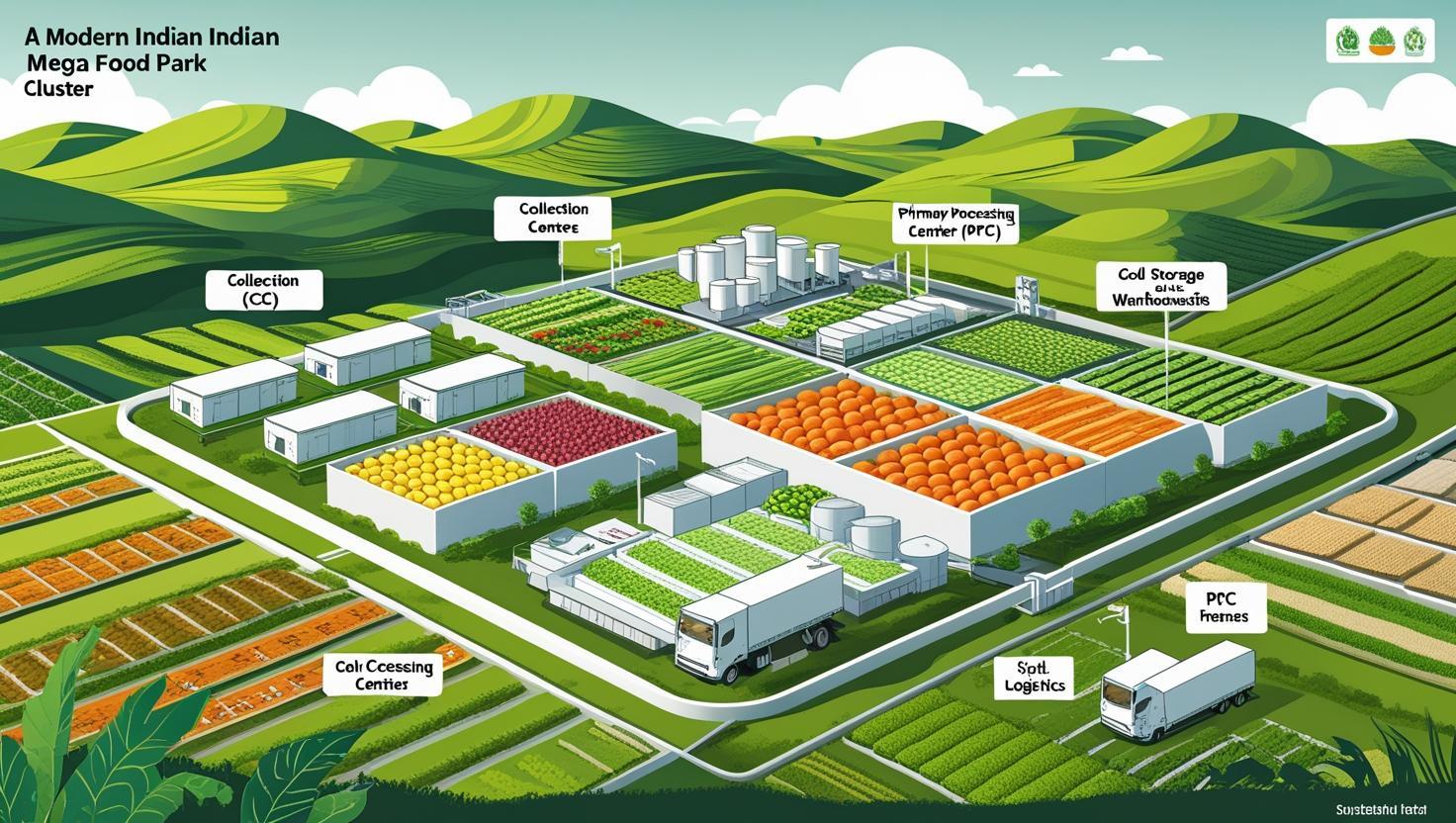
Mega Food Parks are industrial clusters designed to enable efficient processing, storage, and transportation of food from farms to consumers. Under this scheme:
- Infrastructure: Modern facilities like Central Processing Centers (CPCs), Primary Processing Centers (PPCs), and Collection Centers (CCs) are developed.
- Financial Support: Government provides financial assistance of up to ₹50 crore per project.
- Objective: Reduce waste and add value across the supply chain, particularly focusing on perishables.
Structure and Components of Mega Food Parks
- Collection Centers (CCs): Serve as aggregation points for raw produce. Located within a 10 km radius of farms. Managed by local entrepreneurs to support rural commerce.
- Primary Processing Centers (PPCs): Handle raw material processing before transferring to CPCs. Facilities include refrigerated vans for rapid transport.
- Central Processing Center (CPC): Industrial area housing various processing units. Provides amenities like cold storage, warehouses, and logistics.
History of Mega Food Parks in India
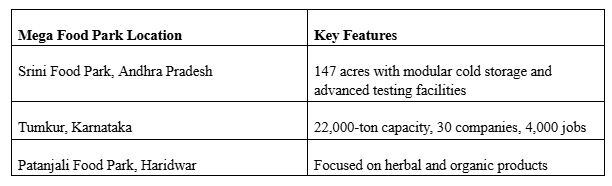
The first Mega Food Park, Srini Food Park, was inaugurated in Andhra Pradesh in 2012. Since then, multiple parks have been developed across the country, including:
Important Features of Mega Food Parks
- Cluster-Based Approach: Ensures connectivity from CCs and PPCs to CPCs.
- Demand-Driven Development: Focuses on backward and forward integration.
- Investment Leverage: Aims to attract private investments through a Special Purpose Vehicle (SPV) structure.
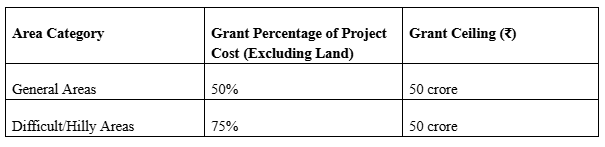
- Government Assistance: Up to ₹50 crore in general areas and ₹75 crore in hilly or difficult terrains.
Procedure of MFPS Implementation
The implementation is carried out through SPVs consisting of stakeholders like banks, organized retailers, processors, and producer organizations. Each SPV is a Company registered under the Companies Act, and is required to have at least three entrepreneurs/business units, which would be independent of each other with no common directors. The land for the project is arranged by SPV
The SPV must meet the following requirements:
- At least 26% of SPV equity should be held by food processors.
- A minimum net worth of ₹50 crore for SPV shareholders, with ₹10 crore specifically for food processors.
Pattern of Government Assistance
Conclusion
Mega Food Parks in India represent a transformative initiative, connecting farmers to markets through robust infrastructure and reducing food wastage. While challenges exist, the potential for economic and social benefits makes these parks a crucial element of India’s agricultural landscape.